


In the 21st century, alongside academic knowledge, soft skills play a crucial role in the comprehensive development of children. Skills such as critical thinking, teamwork, effective communication, and problem-solving are increasingly valued. One of the effective methods to help children cultivate these skills is through programming, especially with the Python language.
Python is a popular and easy-to-learn programming language, particularly suitable for beginners. With its simple and clear syntax, Python helps children easily access and quickly grasp the basic concepts of programming. This not only stimulates curiosity but also helps children develop logical thinking and problem-solving abilities.

Programming requires children to think systematically and logically to solve problems. When writing code, children learn to analyze problems, break them down into smaller steps, and find optimal solutions. Through this process, their critical thinking skills are greatly enhanced, making them more creative and flexible in solving real-life situations.
Many programming projects require collaboration and teamwork. Children will learn to communicate and work together to achieve a common goal. Participating in group projects helps children develop communication skills, learn to listen to others' opinions, and express their views clearly and confidently.
Programming is not just about writing code; it's also about explaining and presenting ideas. When participating in programming competitions or working on projects, children must present and defend their ideas to others. This helps them develop communication skills, becoming more confident and persuasive in everyday interactions.
Python provides children with many tools and libraries to solve complex problems. Through programming, children learn to be patient and not give up when faced with difficulties. The ability to find multiple ways to solve a problem makes them more flexible and creative in their thinking.

Start with basic lessons: Introduce fundamental concepts such as variables, functions, loops, and conditions.
Practice through small projects: Encourage children to create small projects like simple games or useful applications.
Join the programming community: Participate in coding clubs or online forums where children can learn and share experiences with like-minded individuals.
Enroll in courses at Algorithmics: Algorithmics is a reputable educational center offering programming courses for children. Here, children are guided by experienced experts and learn in an interactive and creative environment. The courses at Algorithmics not only help children master programming knowledge but also comprehensively develop essential soft skills.
Encourage creativity: Allow children to freely create and experiment with code. This helps them develop independent and creative thinking.
Learning Python not only helps children grasp a powerful programming language but also aids in the comprehensive development of important 21st-century soft skills. Through learning and practice, children will become more confident, creative, and flexible in all areas of life.
Start the journey of exploring Python with your child today and help them develop holistically, preparing for a promising future!

The 5.0 era, also known as the age of artificial intelligence and automation, is witnessing remarkable advancements in robotics technology. However, can robots completely replace humans in every field? This is a question that many are interested in and discussing. In this article, we will explore various aspects of this issue and examine the factors influencing the ability of robots to replace humans in the 5.0 era.
Robotics technology has made significant strides in recent years. Today’s robots are no longer limited to repetitive tasks in factories but can perform complex jobs in fields such as healthcare, services, and even artistic creation. With the support of artificial intelligence (AI), robots can learn and improve their performance over time.
Robots can work continuously 24 hours a day, 7 days a week without needing rest or breaks. This is particularly useful in manufacturing industries, where maintaining continuous operations is crucial to meet market demands. Using robots significantly increases productivity as there is no downtime due to breaks or shift changes like with humans. Additionally, robots are not affected by factors such as fatigue, stress, or illness, ensuring that productivity remains at its maximum and consistent.

Moreover, labor costs are significantly reduced when using robots. Although the initial investment in robots and automation systems may be high, in the long run, businesses will save on many costs related to wages, benefits, and other personnel-related expenses. These cost savings can be reinvested in other areas of the business, enhancing competitiveness and growth.
With the advancement of sensor technology and advanced control systems, today’s robots can perform tasks with much higher precision than humans. Modern sensors can measure and adjust the smallest details during the working process, ensuring that every operation is performed exactly as required.
For example, in the electronics manufacturing industry, robots can assemble components with an error margin measured in micrometers, something that is very difficult for humans to achieve. This not only improves product quality but also reduces the defect rate, thereby reducing repair and warranty costs. The high precision of robots also helps businesses maintain consistency in product quality, which is crucial for building and maintaining brand reputation.

In many industries, the working environment can be hazardous for humans, such as the chemical industry, mining, or handling hazardous waste. Using robots in these environments helps minimize risks to humans, protecting workers' health and safety.
Robots can be designed to withstand harsh working conditions that humans would find unsafe, such as extreme temperatures, toxic environments, or underwater operations. This not only protects the health and lives of workers but also reduces costs related to workplace accidents, such as medical expenses and insurance.

Furthermore, using robots helps minimize human errors in dangerous processes, thereby reducing the risk of serious incidents. For example, in the construction industry, robots can perform tasks like welding, cutting, or lifting heavy materials more precisely and safely, minimizing the risk of workplace accidents and protecting worker safety.
Despite significant advancements, current robotics technology still has many limitations to overcome. One of the biggest challenges is the ability to perform tasks that require high flexibility and creativity. Currently, robots are primarily programmed to perform specific and repetitive tasks, but they struggle with unpredictable situations or those requiring creativity. For instance, in fields like art, design, or professions requiring constant innovation, robots cannot yet replace human creativity and vision.

Complex social interaction is another major limitation of robots. Although there have been advancements in developing robots with voice and facial recognition as well as understanding natural language, these capabilities are still very limited. Current robots struggle to understand context, emotions, and respond appropriately in social situations. This limits their ability to replace humans in fields requiring high social interaction, such as customer service, education, or healthcare.

Moreover, current robotic technology still heavily depends on controlled working environments. In continuously changing and unstable environments, robots may struggle to adapt and perform effectively. This necessitates the development of more robust sensor systems and artificial intelligence to help robots operate more flexibly and efficiently in varying conditions.
Replacing humans with robots is not only a technological issue but also raises many ethical and social questions. One of the most important issues is how to ensure the rights of workers displaced by robots. Automation can lead to unemployment and economic inequality, especially for workers in heavily impacted industries. Policies and measures are needed to help these workers transition to new careers and adapt to changes in the labor market.

Society will also face significant changes as humans and robots coexist and work together. The presence of robots in daily life can affect how we interact and connect with each other. For example, if robots take on many tasks in healthcare or service sectors, humans may lose some opportunities for social interaction and connection, leading to isolation and reduced quality of life.
Furthermore, using robots raises concerns about privacy and security. Modern robots are often equipped with sensors and data collection systems, which can lead to concerns about personal data misuse or breaches. Clear regulations and standards are needed to ensure that the use of robots does not violate human privacy and security.
Finally, society must consider ethical issues related to using robots in critical decision-making processes, such as in healthcare or justice. How can we ensure that decisions made by robots are fair and unbiased? Who will be responsible when errors occur? These are complex questions that require careful consideration and the involvement of multiple stakeholders to find appropriate solutions.
Instead of fearing that robots will replace humans, we should focus on effective collaboration between humans and robots. This collaboration can yield superior results compared to working separately.
In manufacturing environments, robots can perform heavy and repetitive tasks with high precision, while humans focus on creative thinking and decision-making. For example, in automobile manufacturing, robots assemble parts with high precision, while humans inspect quality and adjust processes.
In healthcare, surgical robots assist doctors in performing complex surgeries with high precision and less invasiveness, reducing risks and recovery times for patients. In services, robots handle simple requests, while human staff address complex issues and provide personalized services, enhancing efficiency and customer experience.
To prepare for a future where humans and robots collaborate, it is essential to train and enhance skills for workers. Soft skills such as creative thinking, communication, and management will become more important than ever.
Creative Thinking: While robots perform repetitive tasks, humans need creative thinking to solve complex problems, propose new ideas, and improve processes.
Communication Skills: Workers need to know how to communicate with both colleagues and robotic systems, understand how they operate, and interact effectively to achieve the best results.
Management Skills: Managing projects that combine humans and robots requires special management skills, from understanding robot capabilities to planning, distributing work, and monitoring progress.
Training and education programs need to be continuously updated to match market needs. Lifelong learning is essential as technology continues to evolve. By collaborating and enhancing skills, we can maximize the benefits of robots and build an efficient and sustainable working environment.
Robots can replace humans in many fields, but they cannot completely replace humans in every aspect of life and work. The combination of humans and robots, along with skill enhancement for workers, will be key to maximizing the benefits of technology in the 5.0 era. Continued research and development of technology, along with careful consideration of ethical and social issues, will help us build a harmonious and sustainable future.
Instead of just letting your child play games this summer, enroll them in game design and programming classes, a rising trend in the 5.0 era. For adults, "Game Development" is not only a hot profession with high income but also a subject that helps children develop logical thinking and creativity. This summer, Algorithmics is organizing game development summer course specifically for children promising to bring new knowledge and skills!
Learning game development is not just an entertaining activity; it brings many benefits to a child's development. In a generation surrounded by digital environments, enrolling your child in game development and design helps them gain deeper technological insights and develop important skills, especially critical thinking.
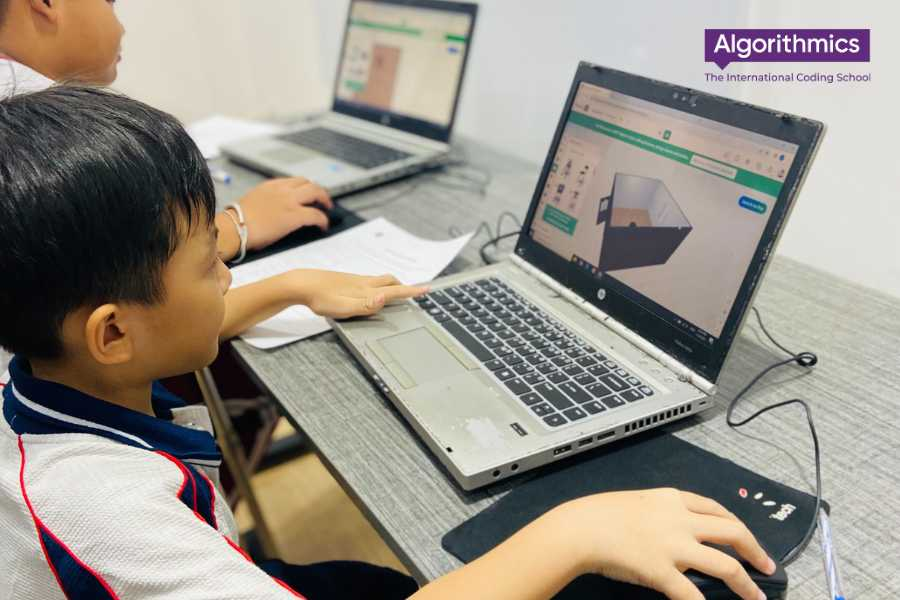
Instead of merely playing games, learning game development gives children the opportunity to combine entertainment and learning. Through creating and testing new games, children not only satisfy their creativity but also learn problem-solving and critical thinking logically. This helps them develop essential soft skills like patience, perseverance, and confidence in tackling challenges.
Additionally, learning game programming encourages children to work in teams and learn from each other. During the game development process, they need to interact and collaborate with others to complete projects. This effectively hones their communication and teamwork skills.
Learning game development not only provides children with deeper technological knowledge but also develops important skills and creates an engaging and beneficial learning environment.
Roblox is a popular online gaming platform that allows players to create and share their own games. With millions of games created by a global community, Roblox is not only a fun entertainment environment but also a useful tool for learning game programming and development.
Roblox offers a user-friendly interface for building your own games. By using Roblox Studio, a powerful built-in tool, children can create diverse games from virtual world simulations to adventure games, construction games, or even educational games.

With this feature, Roblox becomes an attractive platform for learning game programming and development for children. Creating and sharing games on Roblox not only helps players express their creativity but also gives them a deeper understanding of game development processes and programming techniques.
The Roblox Game Development Summer Course: Game Development will provide children with an exciting programming learning experience using the most popular game programming platform today. Throughout the summer course, children will be guided on how to create games from scratch—from the initial idea to the final product. Additionally, they will learn skills such as programming, game design, and project management.
The Game Development summer course is a fascinating program for children. It will be a place where they explore and build games on the most popular platform today—Roblox. During this course, children will not only get familiar with basic to advanced knowledge in building 3D games on Roblox Studio but also use the Lua scripting language to script their games.

Furthermore, after the summer course, children will build at least five major projects and several smaller ones. They will also be guided to develop cross-platform games, enabling their games to run on various devices, including mobile phones.
Most importantly, children will master Roblox Studio tools, from game creation to promotion, helping them become promising game developers.
If you want your child to have a creative and meaningful summer, register them now for the Game Development summer course to explore and develop their creative potential!
For detailed consultation on summer courses and scholarships, parents please fill in the registration form below:
"Website Development" is one of the "hot" professions that brings in soaring incomes in today's 5.0 era. However, website development isn't just for adults. Children participating in website development courses take the first steps toward gaining an overview and the ability to design basic websites. Additionally, learning programming helps children develop soft skills and critical thinking. This summer, Algorithmics is organizing a summer course specifically for children to learn website development, promising to provide them with a wealth of knowledge, skills, and applications for their lives.
Website development involves learning and applying programming languages to create quality and functional web pages. It's a vast field, including learning how to use HTML, CSS, and JavaScript, which help create beautiful user interfaces. It also involves learning programming languages like PHP, Python, or Ruby to build dynamic features and databases.
Learning website development isn't just about learning the syntax of programming languages. It's also about learning how to use tools and frameworks like WordPress, React, or Angular to speed up the development process and improve website performance.

With the increasing demand for user experience on the Internet, learning website development is becoming increasingly important. This opens up vast career opportunities in web development and provides you with the freedom to creatively create unique and appealing digital products.
With in-depth knowledge of programming like the above, teaching children website development and website design may seem "impossible" for many parents. However, depending on the age and depth of the curriculum, website programming and website design classes will have suitable teaching materials and methods for children.
The "Website Development" summer course is a programming course designed by top psychologists and educators at Algorithmics Global based on the psychology and development of children. Unlike traditional website design and programming courses, in this course, children will not only learn theoretical understanding but also practical application. With the accompanying Wix platform, children will have a more intuitive and enjoyable experience in building their own "website" homes.
After just one Website Development summer class, your child will:
Alongside the foundational knowledge of the course, your child will gather skills and develop thinking:
These skills not only support learning and working in the website development industry but also provide long-term benefits for your child's personal development in the future.
Class schedule: Monday to Friday (5 days/week)
Number of sessions: 32 - equivalent to 6.4 weeks of study
Session duration: 1.5 hours/session
Number of students: 3 students/class
Register for consultation on the Website Development summer class here:
You want your child to participate in a summer course, but you don't know what to enroll them in? Do you want your child to engage in an activity with high applicability, easily applied in real life or in school? Learning Python programming will be the optimal choice for your child. Starting to learn the Python programming language early helps your child develop thinking skills and easily adapt to the trends of the 5.0 era. The Python summer course at Algorithmics will bring your child closer to the world of technology.
Python is a widely used programming language in the 5.0 era. Python has simple and understandable syntax, developed by Guido van Rossum and first released in 1991.
Simple syntax: Python uses clear and readable syntax, similar to natural language. Making coding easy and fast.
Versatility: Python is a versatile language. It can be used in many different fields, such as web development, artificial intelligence, data science, gaming, machine learning, and more.
Rich library support: Python has a large community and many extended libraries. Providing tools and solutions for many complex problems.
Strong community: Python has a large and vibrant community. With thousands of users and developers worldwide. Helping support and share knowledge widely.

Web development: Python is widely used in web development. With frameworks like Django and Flask. Helping to build powerful and flexible web applications.
Artificial Intelligence (AI) and machine learning: Python is one of the most popular languages in the field of artificial intelligence and machine learning. With libraries like TensorFlow and PyTorch.
Data science: Python is widely used in data analysis and data science. With libraries like NumPy, Pandas, and Matplotlib.
Gaming: Python is also used for game development. With libraries like Pygame.
Machine Learning (Data Mining): Python provides powerful tools for building and deploying machine learning and data mining models.
Teaching your child Python from an early age is not only a method to help them develop thinking skills but also an important step in preparing for their future. Python opens the door to your child's unlimited success and potential in the digital world!
Unlimited career opportunities: Python is one of the most popular programming languages in the world. Opening doors for your child to thousands of job opportunities in the field of information technology. From software development to data science and artificial intelligence, Python is everywhere.
Easy to learn and use: Python is known for its simple and readable syntax, making learning programming fun and not too difficult for your child. Using Python is also flexible and convenient. Helping your child create applications and projects quickly.
Diverse application capabilities: Python is not only used in web development and applications. But also in many other fields such as data science, artificial intelligence, gaming, and robotics. Learning Python will open up a new world of possibilities and opportunities for your child.
Strong support community: Python has a large and enthusiastic community, with thousands of learning resources, online forums, and free learning materials. Your child can take advantage of these resources to support and develop their programming skills.
Foundation for personal development: Learning Python is not just about learning a programming language. But also a powerful tool to develop logical thinking, problem-solving skills, and creativity for your child. This will bring great benefits to your child's personal development in the future.
One of Python's strengths is its simplicity and ease of learning. Python syntax is clear and does not require the use of complex symbols like other languages. This makes Python an excellent choice for beginners to learn programming. Python also has a large and enthusiastic community, with many learning resources and online sources. Learners can find many documents, tutorials, and visual examples to support their learning process. However, as with any programming language, learning Python also requires patience, practice, and continuous learning.
The Python programming language has become one of the most popular languages in the world, attracting many people interested in learning it. We can learn Python without basic knowledge of programming. Python is considered one of the easiest programming languages for beginners to learn. This is because Python has simple, readable, and understandable syntax. It uses keywords and language structures similar to natural language, making it easy for beginners to access and grasp. Although without basic knowledge of programming, children can learn Python from online documents and courses or directly.

An important thing when learning Python is patience and perseverance. Start with the simplest concepts and gradually move on to more complex ones. Practice and building small projects are also the best way to get acquainted with and improve programming skills.
Learning programming is not only for adults. Children can also start learning programming from a young age. At Algorithmics, the school provides special Python programming summer course for children this summer. Children can start with Python from the age of 11 and easily access this language through a specially designed curriculum for all ages and levels.
Python Start creates a solid foundation for learners starting from scratch. Throughout the summer course, children will be guided from the most basic concepts of Python to practical applications in the field of information technology. Through experiential learning sessions, the group of learners will explore and develop basic and advanced programming skills, such as drawing graphics using the Turtle Module, object-oriented programming, and developing 2D games.
Learning time: from Monday to Friday (5 days/week)
Number of sessions: 36 - equivalent to 7.2 weeks of learning
Session duration: 1.5 hours/session
Number of learners: 3 learners/class
Results after the summer class: Learners will master the basic principles of Python, control flow structures, and have the ability to develop PC applications and games using PyGame.
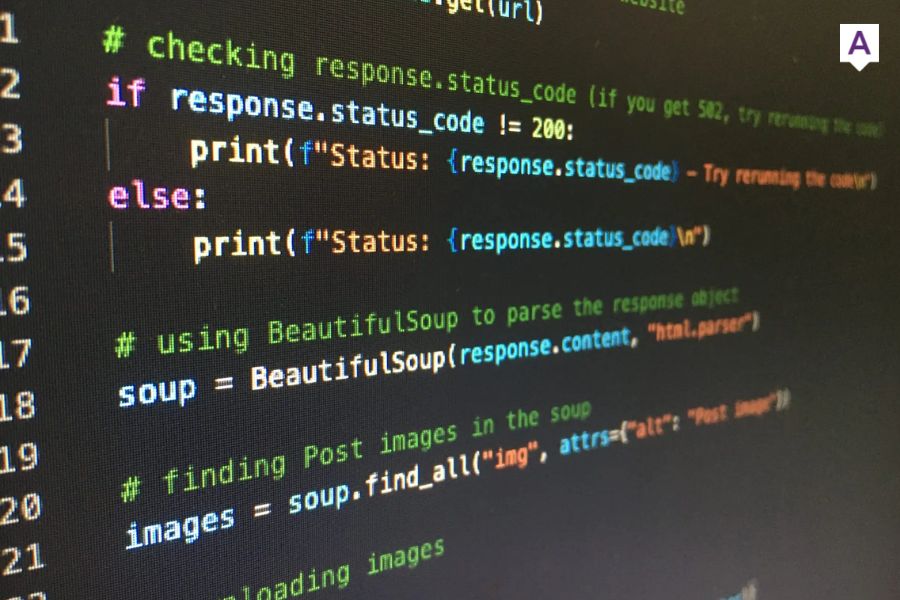
After completing the Python Start course, children can continue with the Python Pro course to further develop and apply Python knowledge to real-world projects. Python Pro not only provides in-depth knowledge of Python but also creates conditions for learners to experience a simulated work environment, from interviews to becoming a professional programmer.
Learning time: from Monday to Friday (5 days/week)
Number of sessions: 38 - equivalent to 7.6 weeks of learning
Session duration: 1.5 hours/session
Number of learners: 3 learners/class
Results after the summer class: Learners will be able to efficiently apply all Python applications in programming, from Data Science to Machine Learning and developing applications for PC with PyQt.
Let's go with your child to the future version 5.0 with the Summer Intensive Course - a place to stimulate creativity and develop thinking. The summer course offers a variety of classes from game programming to website development and Python. Algorithmics will equip your child with important knowledge and skills. Explore unique learning programs and receive attractive offers in May!
In the current era of Industry 5.0, technology and coding have emerged not only as prominent fields but also as the backbone of sustainable future development. From mobile applications to artificial intelligence, from big data to blockchain, all rely on a solid understanding of technology. With the growing importance of technology in general and coding in particular, equipping children with knowledge and skills in technology from an early age is an undeniable priority.
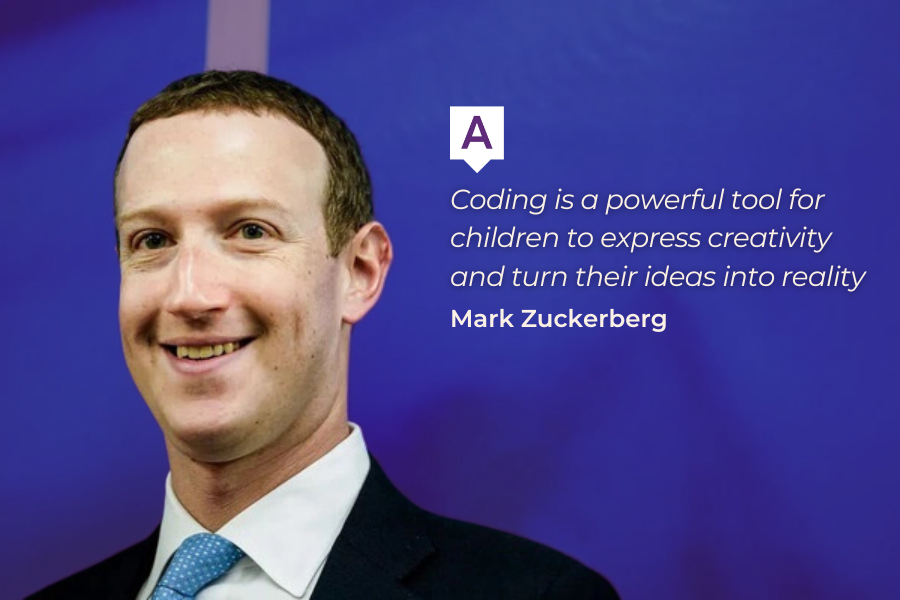
As Mark Zuckerberg, the founder of Facebook, said: "Coding is a powerful tool for children to express creativity and turn their ideas into reality." Introducing children to programming early not only helps them grasp trends and integrate into the future with ease but also develops their thinking and other soft skills through the learning process.
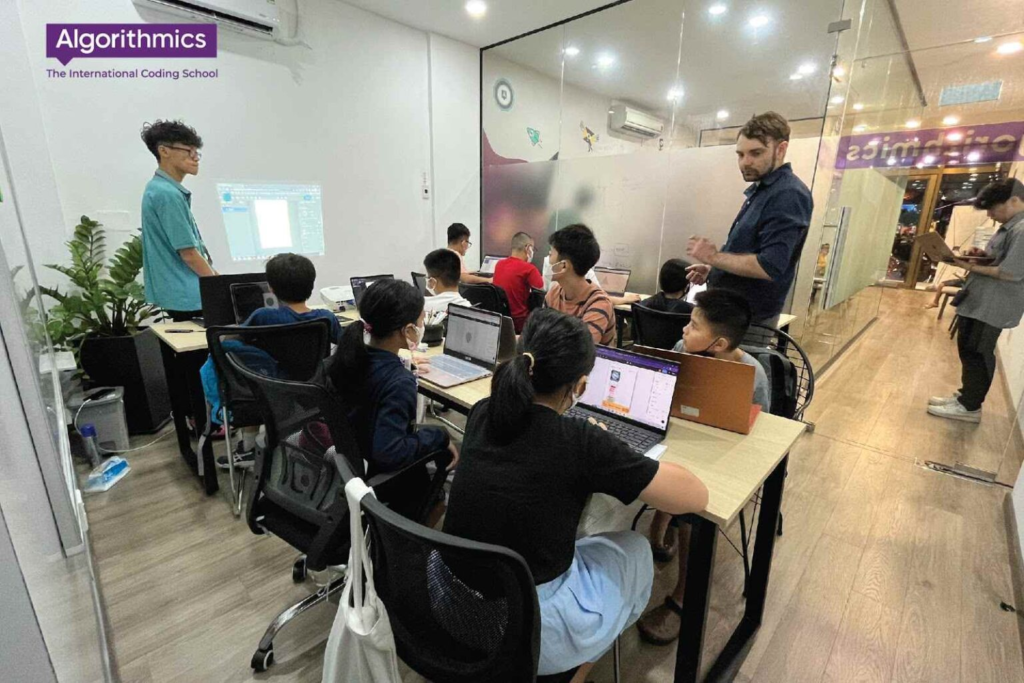
To make your child's summer truly enriching, where they not only have fun but also develop a new skill and learn many exciting things, Algorithmics organizes the "Summer Intensive Course: Unleash Creativity, Activate Intellect". With the goal of stimulating creativity and teaching children how to realize their imagination, along with situations during the learning process that help children actively think, the Summer Intensive Course promises to bring your child a fantastic summer.
The Summer Intensive Course offers various classes with different curricula, diverse age groups, and learning objectives for children. In just one summer, your child can create their own website, game title, or even learn a brand new programming language!
Course Content: The theme revolves around the story of Marsobot conquering Mars. Marsobot wants to build a base on Mars and needs the help of students to complete this new home.
Class frequency: Monday to Friday (5 days/week)
Course durations: 32 lessons - equivalent to 6.4 weeks
Class duration: 1.5 hours/lesson
Number of students per class: 3 students/class
Course Content: With the Game Development program, children will embark on an exciting adventure into the world of game development.
Class frequency: Monday to Friday (5 days/week)
Course durations: 32 lessons - equivalent to 6.4 weeks
Class duration: 1.5 hours/lesson
Number of students per class: 3 students/class
Course Content: Children will explore the main concepts in web design. They will then apply this knowledge to build their own website on Wix, one of the most popular website building platforms on the market today.
Class frequency: Monday to Friday (5 days/week)
Course durations: 32 lessons - equivalent to 6.4 weeks
Class duration: 1.5 hours/lesson
Number of students per class: 3 students/class
Course Content: Children will gain basic knowledge of the Python programming language and all its applications in the most common IT positions.
Class frequency: Monday to Friday (5 days/week)
Course durations: 36 lessons - equivalent to 6.4 weeks
Class duration: 1.5 hours/lesson
Number of students per class: 3 students/class
Course Content: Children will experience a simulated work environment, from job interviews to becoming a senior programmer. Children need to plan, divide tasks, check their own and classmates' code, work in teams, and present projects.
Class frequency: Monday to Friday (5 days/week)
Course durations: 38 lessons - equivalent to 7.6 weeks
Class duration: 1.5 hours/lesson
Number of students per class: 3 students/class
Course Content: Unity uses the high-level programming language C# with a wide range of applications: architecture, animation, animation, games for phones, PCs, and consoles. With this course, children will learn how to build their own world imaginatively and creatively in 2D and 3D formats. Additionally, the course helps children master the process of creating and publishing applications on the Android platform.
Class frequency: Monday to Friday (5 days/week)
Course durations: 32 lessons - equivalent to 6.4 weeks
Class duration: 1.5 hours/lesson
Number of students per class: 3 students/class

In May, Algorithmics brings many SUPER scholarships for parents and children: (Exclusive to the first 20 early registrants)
Note: The program applies cumulative benefits and ONLY APPLIES IN MAY.
For more detailed advice on Summer Intensive Course and scholarships, parents please fill out the registration form below: