

Website development is one of the hottest professions in the current era of Industry 5.0. Although it's a field with income potential reaching thousands of dollars, more and more students are choosing this specialization. Therefore, equipping children with knowledge from a young age not only gives them a competitive advantage in the future but also brings various benefits. Let's explore what the Website Development course for children at Algorithmics will teach your child!
Parents often think that, to program a well-functioning website, children need basic coding knowledge before delving into this field. However, learning website development has become much simpler nowadays, especially with courses designed for children.
When attending a the course for children, they will:
Start from the Basics:
Modern web design platforms and courses do not require children to have prior coding knowledge. Instead, these courses provide fundamental knowledge, making it easy for children to approach and learn flexibly.
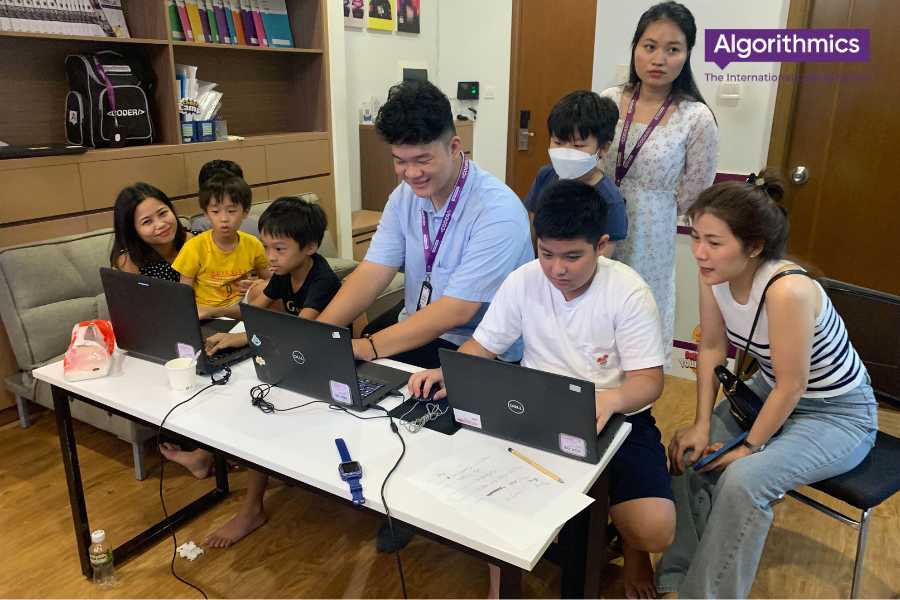
website development course for children
User-Friendly Interface for Beginners in Web Design:
The interfaces of current website design software are not only user-friendly for beginners but also very appealing to children. This creates a creative and interesting learning space, allowing children to easily access and unleash their creativity on their coding and web design journey.
Wix is a leading website development platform, offering users a simple and creative experience in building websites. With its intuitive interface, drag-and-drop tools, Wix is an ideal choice for both beginners and experienced web programmers.
Wix not only provides a powerful and flexible platform but also has a creative community and enthusiastic support. Children will have the opportunity to share ideas, learn from others, and seek help from this large community.

Website Development course for children
Wix not only helps children optimize their learning but also provides optimization tools for SEO. Especially with Wix, children will no longer worry about complex technical aspects and can focus entirely on designing and creating content for their websites.
In the Website Development course for children at Algorithmics, children will learn how to design websites on Wix and make the most of the features on this platform. Here, children will explore the world of graphic design and apply these important concepts to building their personal websites on Wix - one of the most well-known website building browsers on the market today. Through this course, your child will not only master programming techniques but also develop design skills and creativity, creating unique and interesting personal websites.

Website Development course for children
Course Duration:
64 Sessions / 16 Months / Course
90 Minutes / Session / Week
Class Scale: <12 students
The Website Development course for children is a creative and exciting journey to explore the world of coding and web design. Here are some important topics that children will learn in this course:
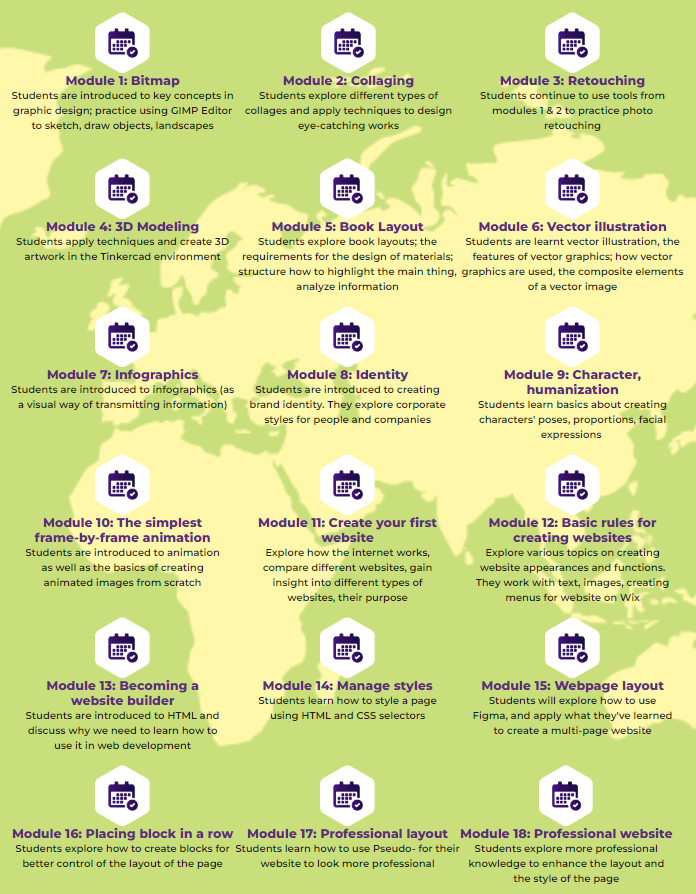
Module 1 - Bitmap:
Starting with exploring graphic design concepts, students will practice with the GIMP Editor to sketch, draw objects, and landscapes.
Module 2 - Creating Collage Paintings:
Students will explore different types of collage paintings and apply techniques to create animated images.
Module 3 - Photo Editing:
Continuing to use tools from previous modules, students will practice professional photo editing.
Module 4 - 3D Modeling:
Applying techniques to create unique 3D works in Tinkercad.
Module 5 - Book Content Structure:
Students will learn how to structure a website. This highlights important ideas, enhances information analysis skills for the website.
Module 6 - Vector Illustration:
Explore the use of vector graphics and component elements of vector images.
Module 7 - Infographic:
Introduction to infographics, conveying information visually and effectively.
Module 8 - Branding:
Students will define the brand and business style for individuals and companies.
Module 9 - Character Personalization:
Master how to create poses, proportions, gestures, and expressions for characters.
Website Development course for children
Module 10 - Basic Animation:
Introduction to animation and basic knowledge of creating animations.
Module 11 - Creating the First Website:
Explore how the internet works, compare and understand different types of websites.
Module 12 - Website Creation Rules:
Explore various topics to create the interface and functionality for the website.
Module 13 - Becoming a Web Developer:
Introduction to HTML and its relevance to web development.
Module 14 - Website Structure:
Learn how to create structure for a website using HTML and CSS.
Module 15 - Website Design:
Use Figma and apply learned knowledge to create a multi-page website.
Module 16 - Horizontal Block Stacking:
Learn how to create blocks to better control the layout of the website.
Module 17 - Professional Layout:
Learn how to use Pseudo to make the website look more professional.
Module 16 - Completing the Website:
Supplement professional knowledge to improve the layout and style of the website.
After completing the this course, students will:
Master the principles of design and visual communication:
Students will become experts in applying design principles and visual communication to their work. From using color, structure to selecting images, they will feel comfortable and confident when executing graphic design projects.
Creatively complete at least 9 graphic design projects:
Students will develop creative skills by completing at least 9 graphic design projects. This not only helps children build a diverse portfolio but also provides an opportunity to demonstrate diversity and flexibility in graphic arts.
Learn about computer networks and website evaluation:
Students will understand how computer networks operate and be able to professionally evaluate a website. They will distinguish between a beautiful website and its functionality, applying this knowledge to the development of their websites.
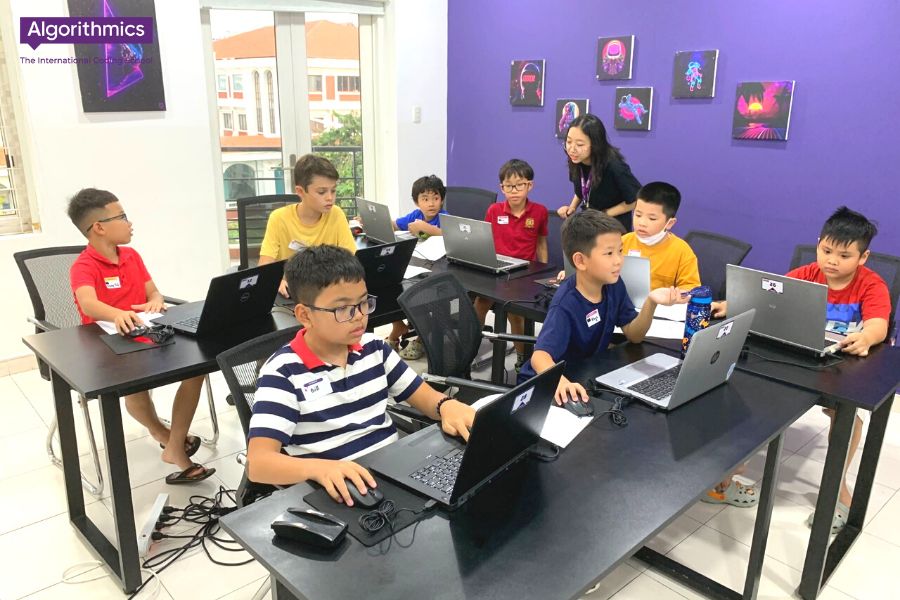
Website Development course for children
Master HTML & CSS:
Students will use HTML and CSS proficiently, two important languages in web programming. This helps them build and customize their websites according to their professional and efficient preferences.
Apply UX/UI principles when building websites:
With a complete understanding of HTML and CSS, students will apply UX/UI principles proficiently when building websites. They will have a clear understanding of user experience and user interface, creating websites that are not only visually appealing but also easy to use and effective.
Website Development course for children
With the Visual Programming coding course for children aged 8-12, they will be creative, develop algorithm thinking, and build a solid technological foundation. The course revolves around Marsobot's mission to conquer Mars, promising students a unique and exciting learning experience. Let's explore the Visual Programming course for children!
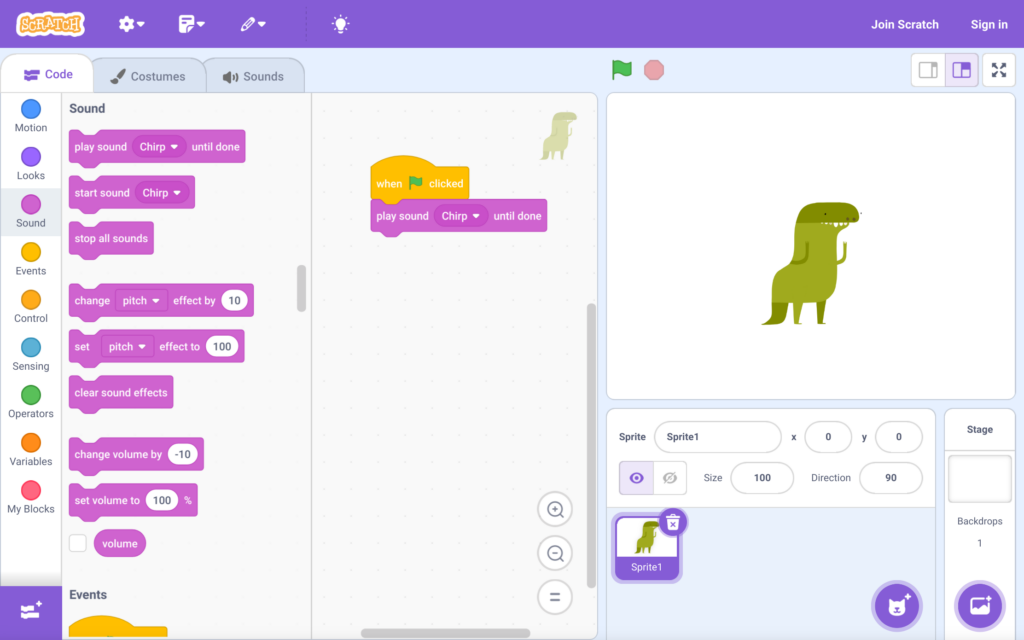
Visual Programming Language is a type of programming language where commands and programming tools are represented as images, diagrams, or drawings instead of being written in text. The goal of this language is to reduce the complexity of coding, making the programming process more visual and understandable for those new to programming or without a programming background.
Coding course for children aged 8-12: Visual Programming
Visual programming language is designed to help users interact with software or systems without needing to know too much about the technical details inside. Programming blocks, diagrams, or images are connected to form logical threads and functions, helping programmers understand how elements interact with each other visually.
A common example of a visual programming language is Scratch, an educational programming environment designed for children.
Visual programming language is not only easier for children to learn but also brings many important benefits for their development. Especially in terms of thinking and forming new habits.
Visual programming languages often use images, diagrams, and visual objects instead of complex syntax. This helps children easily grasp and understand programming concepts without needing to learn intricate language syntax.

Coding course for children aged 8-12: Visual Programming
Instead of writing lines of code consecutively in a purely text-based environment, with a visual programming language, children only need to arrange commands, blocks logically to make the project work.
Using programming blocks, images, and diagrams allows children to experiment with their ideas flexibly. They can see results immediately, encouraging creativity and a spirit of experimentation.
Learning visual programming helps develop logical thinking and problem-solving skills. Children need to think about how programming blocks interact with each other to create functioning programs. Visual programming also encourages children to use problem-solving skills, asking questions, finding solutions, and implementing them in a safe and exciting environment.
In the digital age, understanding programming contributes significantly to a child's future. Starting to learn programming at an early age helps children build comfort and confidence with technology. Additionally, during the learning process, children often work in groups to solve programming problems, fostering communication and teamwork skills.

Coding course for children aged 8-12: Visual Programming
The combination of learning and playing makes children more interested and maintains focus during the process of creating their own game projects. With these benefits, learning visual programming language not only helps children understand technology but also develops many essential skills for the future.
Not just an ordinary coding course, the coding course for children at Algorithmics always follows an interesting storyline, making learning programming more engaging and accessible than ever.
Visual Programming with an interesting storyline. Marsobot is a robot with a dream of building its base on Mars. However, to complete the base, he needs the support of Algoers. Algoers will accompany Marsobot to complete this base.
Building process includes:

Coding course for children aged 8-12: Visual Programming
Module 1 - Introduction:
Algorithmic thinking and its application in daily life.
Module 2 - Space Navigation:
Explore the geometric calculus of coordinates, angles, and space.
Module 3 - Conditions, Procedures:
Use algorithmic thinking to create games and experience the project development process.
Module 4 - Logic Philosophy:
Develop computational thinking and combine knowledge to create group projects.
Module 5 - Variables:
Build game rules and create winning situations.
Module 6 - Replication:
Create and program replicas in the game, complete individual projects.

After 32 sessions at Algorithmics, students will achieve impressive results, reflecting their development and deep understanding of programming. Here are the things your child will learn after graduating from Visual Programming:
Explore and build projects:
From basic to advanced knowledge, students will be able to build creative projects on the visual programming language platform.
Develop algorithmic skills:
Gain a deep understanding of how to develop and optimize algorithms, enabling them to actively solve complex problems.
Master visual programming language:
Master the use and development of projects on Scratch, a popular and easy-to-access visual programming language.
Apply basic programming concepts:
Navigate space, handle conditions, use logical operators, manage variables, and create replicas - all become familiar and flexible in the hands of students.
Stimulate creativity and initiative:
Students will develop the ability to be self-sufficient in creating new ideas and implementing them into unique individual projects.
These skills not only help children understand programming but also support the development of logical thinking and problem-solving abilities, laying an important foundation for their overall development. Let Algorithmics assist your child on this journey, transforming dreams into reality!
Coding course for children aged 8-12: Visual Programming
November has arrived, and it's a great opportunity to begin your child's coding journey with special offers from the Algorithmics scholarship! Explore the world of programming with an international learning environment and expert teachers, along with the irresistible advantages of Algorithmics! Let's learn to code for children with joy - attractive offers
Algorithmics always aims to create opportunities for every child to start their journey in the programming world. Therefore, Algo offers a scholarship of up to 10% when parents register for any programming course for their child, provided that the course has started.

Even though the course has already started, Algo ensures that all students can grasp the lessons fully. Children will participate in catch-up sessions, where they will learn directly from teachers to ensure their understanding and keep up with the lessons.
Details:
Just bring your child to Algorithmics, and parents will receive a special tuition fee discount - an immediate 5% off! Make sure your child will experience a unique, exciting programming learning journey and become a talented programmer with Algorithmics!
Details:

In the era of rapid development of information technology, the role of artificial intelligence is becoming increasingly important, especially in supporting work and creating modern life. Today, the younger generation is not just technology consumers, but in the future, they will be the ones actively making changes and developments.
learn to code for children
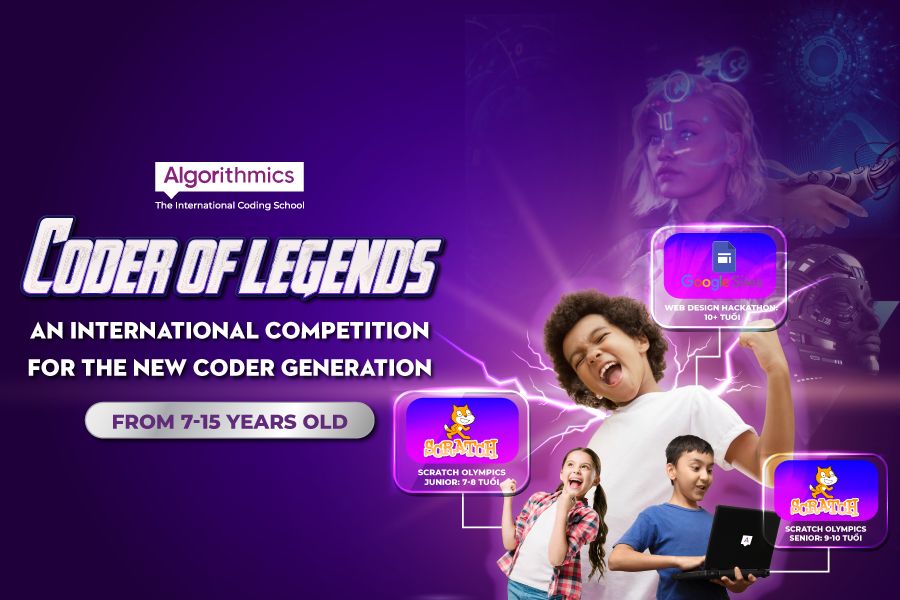
To encourage the creativity and strong development of the younger generation, Algorithmics organizes an international playground called Coder of Legends - a programming competition for young programmers. This is not only a competition but also a space where children can confidently demonstrate their abilities and talents.
Coder of Legends promises to bring valuable prizes:
learn to code for children
Any contestant aged 7-15 can participate in Coder of Legends. There are 3 brackets for different age groups:
Scratch Olympic Junior: For contestants aged 7-8.
Competition content: Create a game with the theme "Maze Exploration."
Scratch Olympic Senior: For contestants aged 9-10.
Competition content: Upgrade the game "Maze Exploration."
Web Design Hackathon: For contestants aged 10-15.
Competition content: Design a website with the theme "Promoting tourist destinations
Learn more information HERE
Coder of Legends is not just a competition but also an interesting, meaningful journey for children to engage and love programming. Register now to let your child become a talented programmer of the future!
learn to code for children
At Algorithmics, we understand that children are always creative and have special talents. Learning programming not only helps develop their technical knowledge but also fosters their unique creativity. Every student at Algorithmics has the opportunity to learn how to develop games, from the initial idea to the final product. Below, let's explore the games programmed by Algoers themselves!
Ping Pong is a simple yet exciting game. In this game, you will try to achieve the highest score to get the best result! What's special about this game is that it was programmed by a 9-year-old Algoers who is currently studying Visual Programming at Algorithmics. Let's discover how to play and challenge yourself in this Ping Pong game!
How to Play: The Ping Pong game is played by simply using the mouse pointer to control the paddle.
Score to Win a Prize: 15 points
Inspired by Mario, Monster Run is a game about a cute little zombie overcoming challenges to collect gold candies. With its adorable colors and addictive gameplay, along with the Zombie character drawn by Algoers themselves, help the Cute Zombie collect as many sweet candies as possible!
How to Play: Use the "Enter" key to make the Cute Zombie jump and overcome obstacles.
Score to Win a Prize: 100 points
Let's recall the once-popular airplane shooting games with Space Shooter! This game has now been reprogrammed by Algoers. Similar to the original version, this airplane shooting game has been recreated by Algoers. Join us and conquer the galaxy with Space Shooter!
How to Play: Use the "left, right, up, down" keys to control the airplane. Use the "Enter" key to shoot.
Score to Win a Prize: 200 points
These fun games were all programmed by Algoers at Algorithmics. This is clear evidence of the development and programming skills that students gain from studying at Algorithmics. If you want to challenge yourself and explore the world of programming, join us at Algorithmics today!
Coding for children is no longer a foreign concept in developed countries such as the UK, the US, South Korea, Japan, etc. This subject is gradually gaining importance in Vietnam as well. Is coding for children difficult? However, for many parents, "learn coding" might not seem like an easy subject for children. Let's explore whether this subject is genuinely challenging and intended only for those with a knack for technology.

Is coding for children difficult?
Coding for children is one of the leading subjects in the era of Industry 5.0. In this subject, children learn how to use technology devices correctly, understand computers, and develop IT-related thinking and skills. There are various coding formats for children, such as robotic coding, pure coding, and more.
Unlike the "difficult" coding for adults, coding for children introduces them to a colorful and exciting world. With platforms and software specially designed for children, they can easily access this subject without feeling too challenging or boring. Children's coding programs usually employ user-friendly programming languages and tools, such as Scratch, Blockly, Python, and many others. The ultimate goal is to help children become creative and eager learners in the field of technology and coding.

In many developed countries like the UK, the US, Australia, Japan, etc., coding for children has been included in the compulsory primary education curriculum for several years. Additionally, numerous studies have shown that learning coding at a young age brings unexpected benefits to children's thinking. Furthermore, in today's Industry 5.0 era, learning coding is more crucial than ever since technology and artificial intelligence are prevalent in our daily lives.
It's not only new IT professionals who need to learn coding, but also office workers, engineers, teachers, etc. They should have a basic understanding of this subject to keep up with future trends.
Is coding for children difficult?
Coding is a vital subject in the Industry 5.0 era. It's not just another skill; it's a powerful tool for personal and career development. Here, we'll explore why coding is becoming increasingly essential for everyone, not just students but also working professionals.
Develops logical thinking: For students, learning coding is not just about writing code. It's an excellent way to develop logical thinking and problem-solving skills. By facing coding challenges, students need to learn how to analyze problems, find solutions, and implement them. It fosters the habit of research and learning, making students proactive in their learning.

Is coding for children difficult?
Saves time and optimizes resources: In the digital age, the ability to search for information and interact online is a crucial skill. Coding helps children learn how to optimize their online resource utilization. They can create tools to automate tasks like data retrieval and personal information management more efficiently.
Supports career direction and job performance: In both work and career, coding skills are highly valuable. It helps you adapt to and use new tools and applications more easily. This is especially critical in a fast-changing world with continuous advancements in information technology. Mastering coding keeps you updated and prevents falling behind in your work.
Explores and enhances various skills: Coding is not just about writing code; it incorporates many different soft skills. Logical thinking, problem-solving, research, creativity, and concentration all develop as children learn coding. Therefore, developing coding skills can lay the foundation for many other skills.
Necessary for all fields: Whether you're pursuing a career in IT or not, learning coding remains essential. Proficiency in the basics of coding allows you to have a better understanding of technology – the "golden key" to access new knowledge and tools in the digital age. It also helps improve various other skills, such as logical thinking, problem-solving, proactiveness, and creativity.
If computer science is considered a challenging field, coding for children is entirely different. Any child can learn coding. With simple knowledge that doesn't demand deep technical expertise and skills, coding for children is a diverse and unique field compared to adult coding. Coding for children aims to help children develop their thinking, soft skills, and understanding of how computers work, applying this fundamental knowledge to their daily lives.
When your child joins this field, they will learn in an entirely different environment compared to adults:
User-friendly tools: There are many coding tools specifically designed for children, such as Scratch, Blockly, and Tynker, with easy-to-use graphical interfaces and drag-and-drop features.
Is coding for children difficult?
Learning through games: By integrating learning with gaming, children can find coding exciting rather than just playing games.
Easy-to-understand study materials: Coding courses and materials for children often use straightforward language and illustrations to make coding concepts easy to understand and apply.
Children may encounter certain difficulties while learning coding. Here are four common challenges and how to help them overcome these:
Concentration difficulties: Maintaining focus can be a significant challenge for children when learning coding. They need to concentrate on the computer and tackle complex code or challenging problems.
Adapting to logical and mathematical thinking: Coding demands high logical and mathematical thinking abilities. Children need to understand how computers work and apply basic math concepts.
Grasping coding concepts: Coding terminology such as "variables," "functions," "conditional statements," "loops" can seem dry and unfamiliar to children. Parents can help children understand these concepts by explaining them in simple terms and relating them to real-life situations.
Problem-solving and creativity challenges: Coding requires imagination and problem-solving abilities. Children need to devise solutions for problems and challenges they encounter.
Is coding for children difficult?
Algorithmics is the perfect choice to introduce your child to coding. Algorithmics' teaching program offers bilingual instruction or is entirely in English, depending on the student's needs. In Vietnam, Algorithmics welcomes students from over 90 different countries, creating a diverse and globally connected learning environment with over 1,000,000 students worldwide.
Is coding for children difficult?
Algorithmics promotes learning by combining theory and practice. Class time consists of 30% theory and 70% practical work through real projects. This approach allows children to naturally apply their knowledge, develop essential 21st-century skills, including problem-solving, communication, teamwork, leadership, presentation, and many others.
All Algorithmics instructors are specialists with professional teaching skills and coding expertise. Students' learning outcomes are assessed and commented on by teachers, and this information is shared with parents at the end of each module. This helps parents closely monitor their child's learning progress in detail.
Algorithmics is not only built by child psychology experts but also involves curriculum development and coding experts. Furthermore, the curriculum is continuously improved based on students' learning outcomes over a period of 6 months to 1 year, ensuring it reflects new requirements and opportunities in the field of coding.
Whether you want your child to explore coding for personal development or to prepare for a future career, Algorithmics provides the ideal platform for young learners to embark on their coding journey.
Is coding for children difficult?
In this age of global technology and internet ubiquity, how can we protect our children from the harms of technology without leaving them lagging behind? Guiding and educating children about online safety, distinguishing and verifying information, and more have become more necessary than ever. Understanding the concerns of parents, Algorithmics offers the Digital Literacy course - a coding course for children to master internet knowledge, providing parents with what they need to protect their children.
In this era of continuous technological advancement, restricting children from using electronic devices will likely cause them to fall behind their peers. While their friends can become proficient with various tech devices, and even code their own technology projects, we would be holding our children back by preventing them from using electronic devices.
However, due to our busy schedules, we may not always have the time to guide or educate our children on using technology safely. We also fear that our children may be negatively affected, become addicted to games, or misuse technology. As a result, parents may decide not to expose their children to technology.

a coding course for children
But is restricting children's use of technology the right approach? American psychologist Rudolph Drex has an interesting perspective on this. He suggests that whenever parents push or compel their children to do something, it can lead to a power struggle. These clashes tend to occur more often in children with stronger personalities.
Understanding the concerns of parents, Digital Literacy is a coding course for children designed to help them develop technology skills, grasp internet security principles, and learn various AI and educational technology tools.
Digital Literacy is a coding course designed for children aged 7-9. In this course, your child will meet new friends: Katie, Doc, Unique, Dina, and Pineapple. Your child will take on the role of a support friend for these five characters, helping them organize a small performance by writing scripts, assigning roles, and rehearsing with their friends.
The Digital Literacy course not only equips your child with essential skills but is also designed with an engaging storyline. This makes learning coding more enjoyable for children and piques their interest in learning.

a coding course for children
The course spans 32 sessions, equivalent to 8 months, with each session lasting 90 minutes and occurring once a week. With fewer than 12 students per class, teachers can easily monitor your child's learning progress.
Module 1 - Basics: In this module, children will learn what information is and how computers process and store it. They will also explore the concept of the cloud and how data is stored on computers and in the cloud.
Module 2 - Graphic Editing Software: Children will be introduced to the world of graphics and create digital art. They will apply their creativity to colorize digital drawings and learn how to create personal projects.
Module 3 - Online Communication: This module helps children understand how to secure their personal information when communicating online and establish rules for online communication.
Module 4 - Internet Information Search: Children will learn how information is stored on the internet and how to search for and verify information online.
Module 5 - Presentation Building: Children will become familiar with presentations and create graphic slides to present information effectively.
Module 6 - Spreadsheet Editing: Children will learn to create spreadsheets and use them to solve mathematical problems.
Module 7 - Visual Information Presentation: They will become acquainted with visual information presentation tools like Canva and learn how to transform textual data into interesting charts and graphs.
Module 8 - Budget Management and Expenses: Finally, children will learn to create invoices and manage personal budgets.

a coding course for children
After completing the Digital Literacy course, children will have a strong understanding of computer operations and data processing. They will become familiar with cloud data storage and develop skills in online communication and verifying information. Moreover, they will master the skills of designing, building, and delivering effective presentations using graphic editing software like Pixel and Canva.
In addition to the knowledge gained, children will also develop various soft skills, such as:
Register your child for the Digital Literacy course to assess their critical thinking skills today with Algorithmics.
a coding course for children