


As the excitement of the back-to-school season approaches, are your youngsters geared up for an enthralling new academic journey? Algorithmics brings forth an array of captivating activities and unforgettable learning experiences this August. Let's delve into the highlights of the scorching programs awaiting you at Algorithmics this month!
Embarking on the coding path will now be more exhilarating than ever with the captivating Coder Kit. It's not merely about undergoing coding courses that propel youngsters into the realm of future technology. By enrolling in an August course, Algoers will also receive an exclusive Coder Kit package. This enthralling bundle comprises an ultra-stylish Coder backpack, a personalized study journal, and a distinctive pencil. This gift ensemble shall be a delightful companion throughout the forthcoming academic season. It's not just a delightful segment of their learning expedition; it's an avenue for youngsters to explore, innovate, and leave an indelible impression.

Detailed Program Information:
Driven by a resolute belief in the significance of imparting technological knowledge to children in the era of 5.0, Algorithmics is extending 30 scholarships, up to 25%, for the first 30 students registering in August. This isn't solely an opportunity to amplify coding proficiency; it's a dedicated investment in your child's future. These scholarships constitute a cornerstone for nurturing innovation, self-assurance, and success in the contemporary technological landscape.

Detailed Program Information:
This August, Algorithmics proudly presents the remarkable "A.I: Discovery Quest - Unleash Your Digital Genius" event. The program's essence lies in enhancing children's comprehension of technology's significance in daily existence and unleashing the boundless potential of Artificial Intelligence. During this event, participants will embark on a vivid and innovative expedition, exploring diverse applications of A.I. This isn't merely an opportunity to encounter reality; it's a platform that empowers youngsters to exude confidence in their creative aptitudes and digital-era learning.
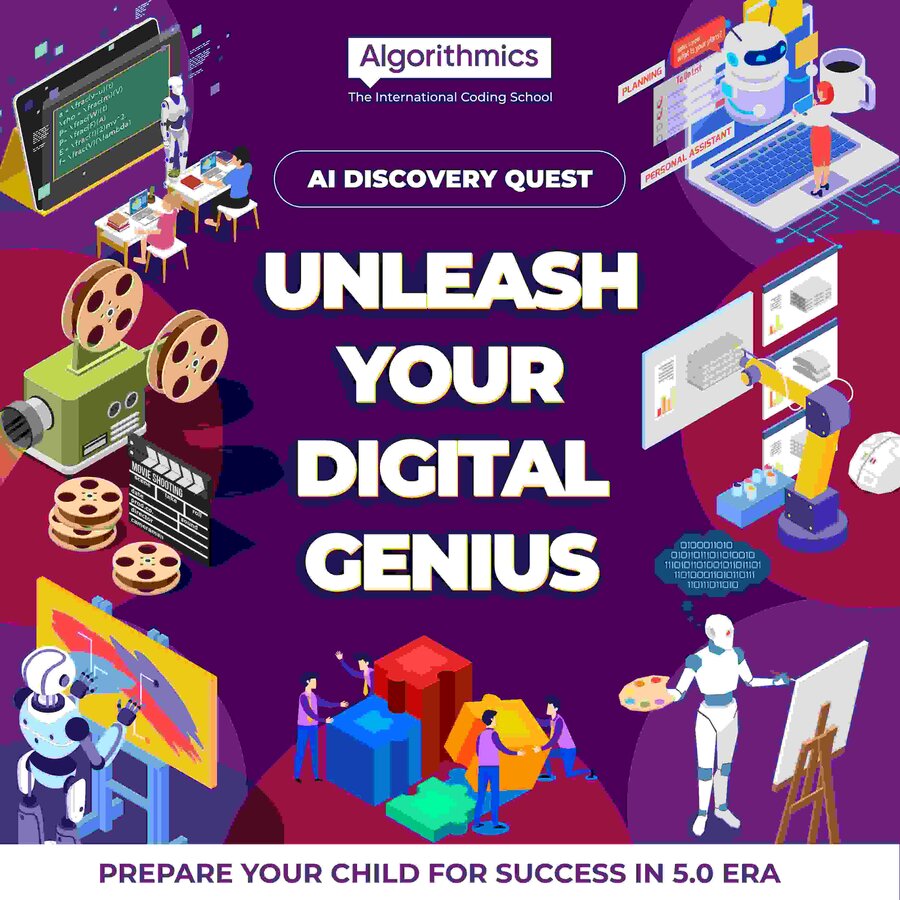
Event Particulars:
Register for the event HERE
Join us in August, where the pursuit of knowledge transcends its accumulation, transforming into an immersive voyage of exploration, revelation, and ingenuity in the promising realm of Artificial Intelligence at Algorithmics!

Explore the societal journey through significant industrial revolutions in history. From the first Industrial Revolution 1.0 to the transformative changes preceding the modern Industry 4.0, we will delve into the societal, economic, and cultural transformations. Discover the impact and lessons drawn from these periods of change and innovation in human history in the following article with Algorithmics!
The Industrial Revolutions (IR) - also referred to as the First Industrial Revolution - is a crucial historical phase that took place in the 18th and 19th centuries. It marked a comprehensive shift from "manual-agrarian production" to "industrial production driven by the robust development of machinery and technology."
Before the IR, most production relied on manual labor and traditional methods. Work was typically done by hand by artisans and craftsmen. However, the 18th century saw technological advancements emerge, particularly in machinery, labor productivity, and transportation.
The first Industrial Revolution originated in England, where British inventors took the lead in this period of innovation.
After the Crusades, warriors returned from conquests with new and exotic items such as perfumes, spices, and steel products from the East. With the aim of expanding markets and meeting rising commodity demands, Western Europe propelled trading activities and boosted commodity-driven economies. The bourgeois class in Western Europe sought to extend markets to the East to acquire sources of gold and silver. Simultaneously, the nobility in Western Europe also grew, leading to an increased demand for luxury goods from the East, such as pepper, cinnamon, incense, silk, ivory, and other unique products.
Meanwhile, the Silk Road - the trade route from the East to Western Europe - was under the control of the Ottoman Empire, which posed difficulties for Western trade activities. Consequently, Western Europeans sought new sea routes.
During this time, many Western Europeans believed in the theory of a spherical Earth and ventured to sail across the oceans by constructing sail ships. The determination of these brave sailors and the ocean-crossing capabilities of these ships spurred the idea of expanding business activities and seeking new opportunities worldwide.

From these early steps, the Industrial Revolution emerged, signifying the transition from manual craftsmanship to industrial production and sparking a significant revolution in human history.
The Industrial Revolution (IR) is a comprehensive transition from manual and agricultural production to industrial production, based on the strong development of machinery and technology. The IR has occurred multiple times in human history. Below is a summary of the key stages of the Industrial Revolution:
Around the late 18th to early 19th century.
Originated in England with the emergence of technological inventions such as automated weaving machines and steam engines.
Technological advancements in the textile industry: The steam engine by James Watt, a Scottish inventor, improved energy efficiency and productivity in manufacturing.
Lathe machine: Thomas Blanchard invented the lathe machine around 1820, enhancing the production of machine parts and reducing costs.
Railway construction: The first steam-powered railway, "Rocket," designed by George Stephenson, started operating in 1829.
Mechanical engineering advancements: The mechanical engineering sector saw improvements, facilitating large-scale production of machines and industrial products.

Enhanced industrial production: The First IR marked the shift from manual and agricultural production to industrial production. Inventions increased productivity and efficiency, reducing costs and making manufactured goods more accessible to the public.
Economic growth: The First IR stimulated significant economic growth. Mass production increased output and national income, driving economic development in participating nations.
Urbanization: Migration from rural to urban areas was promoted, leading to robust urbanization. Cities and industrial zones formed, becoming new economic and cultural centers.
Social and labor organization changes: The First IR reshaped social structures and labor organizations. Traditional craftsmanship was replaced by more concentrated work in factories and workshops. Workers and new working-class emerged in society.
Development of mechanical and large-scale industries: The growth of mechanical engineering and large-scale industries was propelled. Large businesses and factories emerged, opening a new era of production scale.
Cultural and lifestyle changes: The First IR brought about significant cultural and lifestyle changes. It fostered progress and transition from agrarian to modern industrial society.

Increasing numbers of industrial zones emerged. Urban migration escalated, leading to modern urbanization.
Small handicraft industries shifted towards large-scale machine-based production, increasing labor productivity and product output.
The working-class grew. They suffered labor exploitation, working up to 14 to 16 hours with harsh living conditions and minimal wages, sparking worker struggles.
Anti-machinery movements, factory demolitions, and uprisings of the working class escalated. Consequently, the working class gradually became an independent political force, demanding changes in the domination by the bourgeoisie.
Population explosion, environmental pollution, and labor exploitation by the bourgeoisie led to numerous conflicts between the bourgeoisie and the working class.
Around the decades from 1870 to 1914.
Germany replaced Britain as the leading industrial nation in Europe.
Technological advancements in electricity: In the late 19th century, the development of electricity advanced significantly. Thomas Edison and Nikola Tesla made vital contributions with inventions like the light bulb and alternating current system.
Steel industry development: The growth of the steel industry shaped the Second Industrial Revolution. The Bessemer steel-making process reduced steel production costs and boosted large-scale mass production capabilities.
Development of the oil industry: Oil extraction and utilization expanded greatly during this period, particularly after oil was discovered in the United States and Europe.
Transportation and communication improvements: Railways and waterborne transportation facilitated market expansion and swift and efficient movement of goods. Communication technologies like telephones and telegraphs connected regions and nations.

Robust development of major industries: Industries such as steel, chemicals, electricity, and oil underwent significant growth, offering new opportunities and contributing to economic development.
Transportation and communication infrastructure development: The expansion of transportation infrastructure like railways and waterways provided favorable conditions for the movement of goods and people. Communication technologies like telephones and telegraphs improved communication and business management.
Increased productivity and cost reduction: The adoption of advanced technologies such as automated machinery and automation in production processes enhanced productivity and reduced costs.
Social and labor changes: The Second Industrial Revolution led to significant urban migration, creating a new industrial labor force. This changed social structures and labor organizations, forming a stronger working class and advocating for labor rights.
Promotion of technological innovations: Many new inventions and discoveries were made in various fields, propelling the industrial sector into a period of progress and rapid development.
Economic growth and global market: Nations became more interdependent in terms of exchanging goods and services, ushering in the era of international trade.

Similar to the First Industrial Revolution, a significant increase in the labor force occurred, especially in the industrial sector. This led to unemployment, low wages, and even prostitution due to insufficient income, consequently resulting in the growth of office workers and labor unions.
Industrial development caused severe environmental pollution, impacting human health and living environments.
The Second Industrial Revolution spurred population growth due to economic expansion and improved living conditions.
With increased job opportunities in factories and workshops, women and young workers entered the industrial labor force, altering their traditional roles in society.
Around 1950 to 1970.
The invention of the semiconductor by John Bardeen and Walter Houser Brattain marked the beginning of this industrial revolution.
Information technology and telecommunications: The development of computers and electronic technology opened up new opportunities in communication, information management, and transmission.
Industrialization of agriculture: The development of machinery and technology in agriculture increased production and improved food quality.
Introduction of production lines: The production line model became a trend in industrial manufacturing.
Development of automobiles and aviation: Cars and airplanes became key modes of transportation, promoting global movement and commerce.
Advancements in nuclear and renewable energy: The Third Industrial Revolution witnessed the development of nuclear energy and renewable sources like solar and wind power, changing how we produce and use energy.
Electronic explosion: The development of computers, TVs, lighting, and other electronic devices transformed daily human life.
Growth of the pharmaceutical and healthcare industry: Significant medical inventions improved health and healthcare for people.

Digital revolution, information technology, and telecommunications: Computers, the Internet, and mobile phones altered the way people work, learn, and communicate. Consumer electronics like TVs, radios, personal computers, and mobile phones became widespread and indispensable in daily life.
Development of the automobile and aviation industry: Cars and airplanes became primary modes of transportation, expanding the scope of movement and global trade.
Healthcare improvements: Advances in medicine, medications, and medical devices saved lives and enhanced quality of life.
Renewable energy development: The Third Industrial Revolution fostered the growth of renewable energy sources like solar and wind power, contributing positively to reducing greenhouse gas emissions and protecting the environment.
Development of data processing and analytics technology: Automated production lines and information systems improved efficiency and reduced errors.
Expansion of the global market: The Third Industrial Revolution significantly boosted global economic connectivity and exchange. Trade promotion and international cooperation created numerous business opportunities and development.
Emergence of the working class and labor struggles: The rise of the working class in the Third Industrial Revolution led to stronger labor organization and struggles. Harsh working conditions in factories and workshops prompted demands for better working conditions, higher wages, and protected rights.
Changing role of women in society and labor: With increased demand for labor in the industrial sector, many women entered the workforce and gained opportunities outside traditional industries and services.

Social and cultural changes: Lifestyles, work practices, and communication methods underwent transformation. Social media and the internet created new ways of accessing information and communication.
Increased urbanization: Large cities emerged and attracted rural populations seeking employment and opportunities.
Sustainability challenges: Industrial and technological development in the Third Industrial Revolution posed environmental challenges such as air, water, and soil pollution. Sustainable practices and environmental protection became more crucial than ever.
Growing class inequality and societal division: Rising wealth inequality and social division occurred. The affluent and capitalist class became wealthier while some parts of society faced economic difficulties and instability.
Impact on employment: Traditional industries dwindled, and many jobs were replaced by automation and information technology.
2011 to the present.
A group of German scientists developed a high-tech strategy in 2011 to serve the German government. This could be considered the origin of the Fourth Industrial Revolution (4IR).
Development of digital technology: The rapid advancement of digital technology, the Internet, and telecommunications opened up new global connectivity and information exchange opportunities.
Artificial Intelligence (AI) and Machine Learning: The rapid development of AI and machine learning enhanced computing and information processing capabilities, creating new applications in various fields and promoting automation.
Automation and robotics: Automation and robotics technologies are advancing significantly, replacing human labor in various industries and increasing production efficiency.
Internet of Things (IoT): IoT allows devices and machines to connect and exchange data via the internet, enabling smart and automated interactions in daily life.
Blockchain technology: Blockchain technology is driving the development of potential applications like cryptocurrencies and smart contracts, ensuring transparency and reliability in transactions and business processes.
Convergence of technologies: The 4IR is formed by the convergence and integration of multiple advanced technologies, introducing new approaches to manufacturing, business, and daily life.

High interaction capabilities: Humans now interact not only with other humans but also with robots and systems through networked devices. This includes managing business information and products through clicks.
Decentralization: People today can design self-managing processes for businesses, incorporating physical elements, network space, and decision-making autonomy.
Real-time analysis: Rapid data collection and analysis enable monitoring and optimization of processes in real-time, allowing immediate adjustments and decisions.
Virtualization: Virtual models of physical industrial processes are created through data collection and modeling. This facilitates easy testing, evaluation, and improvement of processes efficiently and time-saving.
Service orientation: The ability to deliver new values to meet customer needs in the form of multi-service or improved services has led to innovative business models.
Scalability: Industries and businesses have flexible systems to adapt to user needs, with the technical ability to expand to meet business development requirements.

Cybersecurity and privacy concerns: In the era of the Fourth Industrial Revolution, with data and user information being digitized and stored, cybersecurity and privacy become crucial. IoT devices are vulnerable to viruses and breaches, risking the theft of strategic security data.
Skills and education need upgrading: Under the rapid changes brought by science and technology, individuals need continuous learning and adaptation to keep up with the times.
Machine dependency has drawbacks: Over-reliance on technological devices can lead many businesses into significant vulnerabilities.
Industry 5.0 reflects a shift from focusing solely on economic value to focusing on societal value, and from welfare to prosperity.
Industry 5.0 emphasizes human-machine collaboration, where robots and intelligent machines work alongside humans. This collaboration is enabled by advanced technologies such as the Internet of Things (IoT) and big data. It builds upon the foundation of Industry 4.0 and is supported by advancements in Information Technology, including Artificial Intelligence, Automation, Big Data Analytics, IoT, Machine Learning, Robotic Learning, and Virtualization.
Industry 5.0 incorporates a human element into the technological achievements of Industry 4.0. Furthermore, it is a broader concept, described by the European Union as an industrial vision that goes beyond efficiency and productivity goals, reinforcing the role and contribution of the industry to society.

Industry 5.0 aims to assist humans, not replace them. Manufacturers understand the value of human intuition and problem-solving abilities and are positioning themselves to enhance these qualities.
In Industry 5.0, there's a search for optimal balance between efficiency and productivity. The goal of Industry 4.0 was to connect machines, processes, and systems for maximum performance optimization. Industry 5.0 takes this efficiency and productivity one step further, focusing on enhancing the collaborative interaction between humans and machines.

During the production process, it's recognized that robots can free humans from physically demanding tasks, allowing them to focus on other tasks. The era of Industry 5.0 acknowledges that humans and machines must be connected to meet the complexity of future production, dealing with increased customization through robot-optimized production processes.
Programming is a representative subject of the "digital age." However, with numerous programming learning schools and different curricula available, what criteria should parents use when choosing a programming school? How can one assess the quality, effectiveness, and reliability of a programming center? In this article, we will explore the standards for evaluating programming schools. How to apply them to make an informed decision in selecting a suitable center for your child.
In the current era of rapid technological development, learning programming has become an essential and crucial skill for students. Programming helps children develop logical thinking, creativity, and problem-solving abilities. Moreover, it provides an excellent opportunity to challenge their creative abilities and turn abstract ideas into tangible products.
However, to reap the valuable benefits of programming education, choosing a high-quality programming center is vital. A reputable and quality programming school will provide students with a conducive learning environment, diverse courses, and modern teaching methods.

To assess a quality programming school, there are some important criteria to consider:
User-Friendly Platform: An optimized and user-friendly learning platform will make it easy and engaging for children. Especially those new to programming.
Regular Updates and Upgrades: Since programming is a technology-related subject. The platform and curriculum must be regularly updated to stay current with the latest trends, ensuring students have access to the newest knowledge and information.
Rich and Diverse Content: A comprehensive platform should cater to students of varying ages and skill levels. Which is allowing them to progress from basic to advanced levels.

Diverse and Relevant Curriculum: A quality programming center should have diverse and relevant content that aligns with the latest technologies in the programming field.
Modern and Flexible Teaching Methods: Teaching methods should be flexible and innovative, using modern technologies and resources to create an effective and enjoyable learning experience.
Practical and Applicable: The curriculum and teaching methods should be designed based on practical applications in the real world, enabling students to apply their knowledge to real-life problem-solving scenarios.
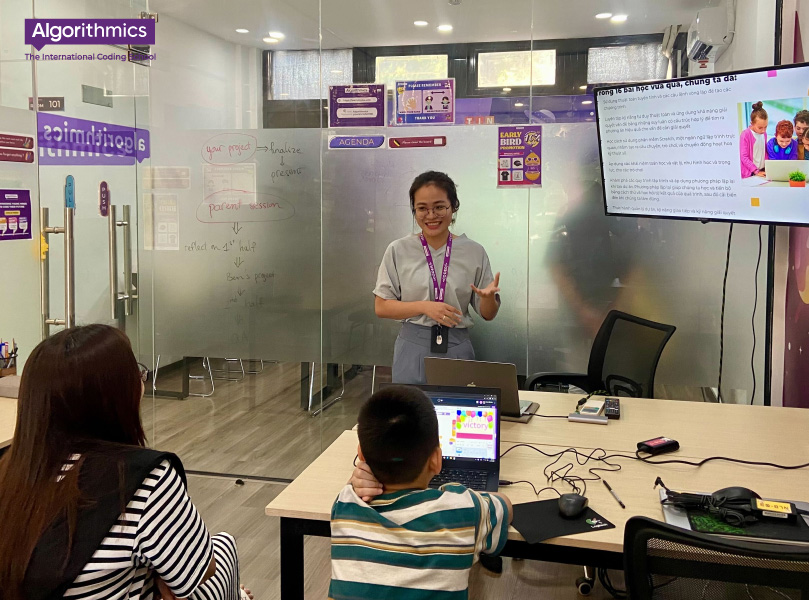
Expertise: Instructors should have a deep knowledge of programming, understanding the latest programming languages and technologies.
Enthusiastic, Dedicated, and Motivating: Reliable instructors actively support students, creating favorable conditions for learning and exploring the world of programming.
Diverse Teaching Styles: The faculty should apply varied and flexible teaching methods to accommodate individual students. They should utilize modern educational technologies and resources to make the learning process engaging and effective.
Creative Thinking and Problem-Solving Skills: Instructors need to possess creative thinking to design unique and captivating lessons and learning activities. They should also have the ability to quickly address challenges and help students overcome difficulties in their learning journey.
Learning Environment: A conducive learning environment plays a crucial role in creating favorable conditions for students to concentrate and study effectively. A friendly atmosphere helps students feel comfortable and confident in their learning.
Computer Labs: As programming is closely related to technology, computer labs are essential. The center should be equipped with sufficient computers for students to practice and apply their programming knowledge to real-world projects.
Cutting-edge Technology: The equipment should be updated with the latest technology to ensure students have access to the most recent developments. This helps students stay updated with the latest technology trends.
Supporting Resources: The center should have ample supporting resources such as textbooks, study materials, and learning platforms to help students grasp programming knowledge effectively. These resources need to be updated and sufficient to cater to the number of students participating in the course.
Safety and Security: The computer labs and practical rooms must be ensured to be safe and secure to protect the personal information and work of the students.

Comfortable and Friendly Atmosphere: The programming center should create a comfortable, friendly, and creative atmosphere that encourages student participation and confidence in the learning process.
State-of-the-Art Facilities: Equipped with modern facilities and resources, including computer labs and practical learning tools, to provide students with the best conditions for hands-on practice and knowledge application.
Dedicated Teaching Team: Teachers and teaching assistants should be passionate about technology and capable of positively interacting with students, guiding and supporting them throughout their learning journey.

Authenticity of Service Quality: Feedback from former students can authenticate the service quality of the programming center. They can share their learning experiences, the teaching approaches, the teaching team, and the available support resources.
Improvement of Education Quality: Feedback from former students helps the programming center identify strengths and weaknesses in the curriculum and services, enabling continuous improvement to better meet the students' needs.
Review of Student Achievements: Feedback from former students provides information on their learning progress and achievements after completing the courses, giving others insight into the effectiveness of the center's teaching and its ability to help students achieve their learning goals.
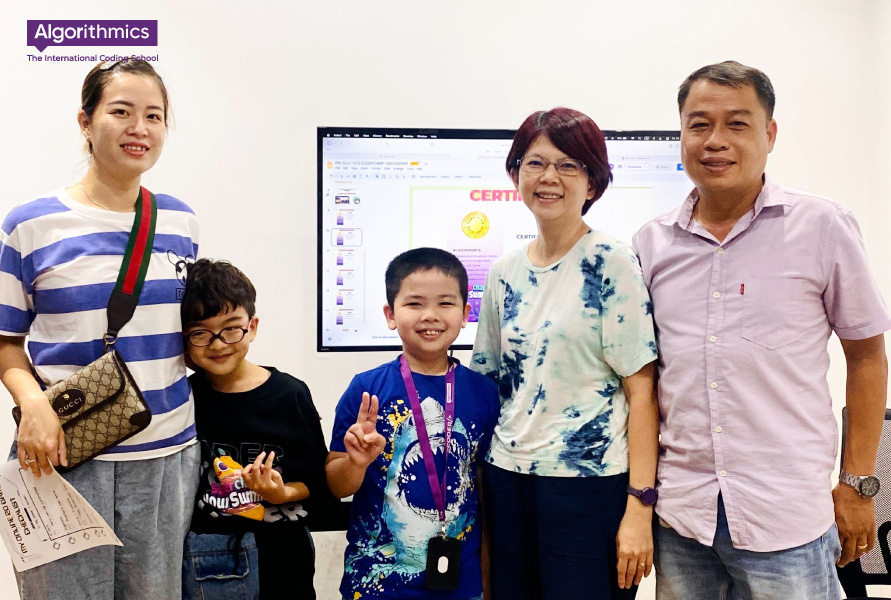
Algorithmics is an international programming school for children aged 5 to 17, where children learn how to use technology and develop essential soft skills for the 21st century. With a presence in over 90 countries and more than 515 cities worldwide, Algorithmics has over 1,100,000 students.

As the first international learning programming schools in Vietnam, Algorithmics focuses on connecting students from over 15 different countries and around the world. With classes taught in English or bilingual settings, students have the opportunity to enhance their language skills and connect with an international community at the Algorithmics platform.
Algorithmics' project-based learning approach focuses on practicality and effectiveness. Students engage in hands-on practice and apply their knowledge through projects, allowing them to grasp concepts naturally. The curriculum also encompasses 4.0 Soft Skills, including problem-solving, communication, teamwork, leadership, and presentation skills, ensuring comprehensive development and confidence in the digital world.
Algorithmics' teaching team and teaching assistants are experts in both teaching and programming. They not only instruct but also accompany and support students throughout their learning journey.
Algorithmics' personalized learning platform is designed based on the individual learning needs and abilities of each student. Students also participate in gamified activities, enhancing the fun and passion for learning. Learning progress is continuously updated and visually represented through charts, making it easy for students and parents to monitor their learning journey.
Algorithmics' curriculum meets international standards and is developed by child psychology experts, curriculum specialists, and programming experts. The curriculum is continuously improved based on students' learning outcomes, ensuring that they always have access to the latest knowledge and technologies in the programming field.
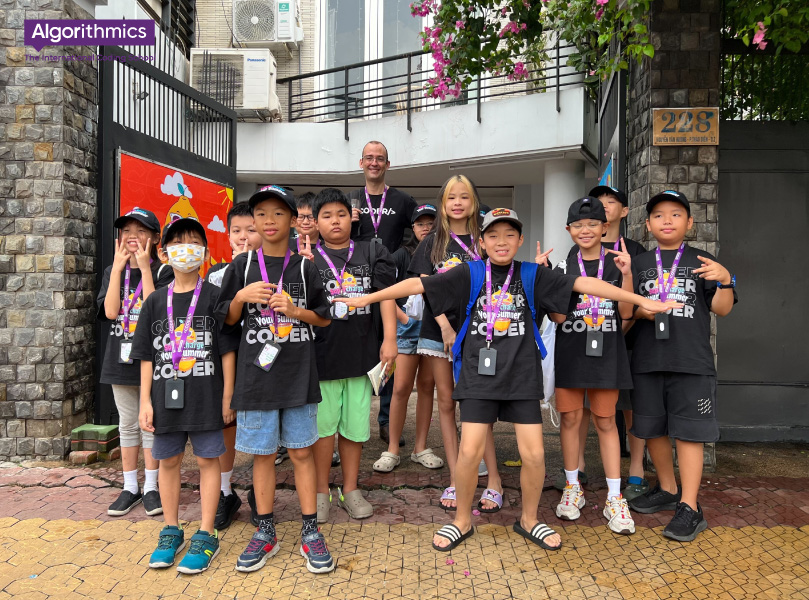
In today's digital world, learning programming is a crucial and necessary skill for children. Choosing a quality programming school like Algorithmics will provide students with the best opportunities to develop their programming skills, establish a strong foundation for the future, and excel in the IT industry. Algorithmics offers an international learning environment, a project-based learning method, and a dedicated teaching team, empowering students to become confident and well-rounded individuals in the world of technology and beyond. It is the top choice for young enthusiasts of programming and technology.

Project-based learning method (PBL) is known as an educational approach that stimulates critical thinking and soft skills for students. This learning method brings numerous benefits to students, especially in the era where "skills are the top priority." Let's explore Project-based learning with Algorithmics!
Project-based learning, also known as the method of learning through projects, is an educational approach that is becoming increasingly popular and significant. It helps children develop critical thinking and soft skills. In this learning method, students engage in real-life projects or tasks, where they acquire knowledge by completing assignments and projects. Through this approach, they not only grasp knowledge and skills but also apply them easily in practical situations.
Project-based learning places students at the center of the learning process, allowing them to participate in meaningful and real-life projects. This method not only enables students to learn more profoundly and effectively but also develops essential skills for life and work in the future. Here, students do not only learn from textbooks but also explore, solve problems, and apply knowledge in real-world contexts.

In traditional teaching methods, students often listen to teachers' lectures and complete assignments. In contrast, Project-based learning immerses students in real-life situations and requires them to find solutions, creating enthusiasm and passion for learning. Learning through projects also encourages students to explore and direct their own learning, fostering independent and critical thinking skills.
Project-based learning, as a method of education through projects, brings numerous significant advantages in educating and developing skills for students:
Throughout the project implementation, students are encouraged to think creatively to find new solutions for problems. Project-based learning also helps students develop problem-solving skills, from analyzing problems to finding appropriate solutions.
In Project-based learning, students often work in teams. To complete a project, team members must learn how to collaborate, allocate tasks, and communicate effectively. They learn to listen to their teammates' opinions, express their ideas, and work together efficiently, enhancing their teamwork and communication skills.

Learning through projects helps students understand better how to apply knowledge in real-life situations. Instead of learning only theory, students have the opportunity to practice and experience, gaining a deeper understanding of the meaning and application of knowledge in daily life. This stands out as one of the prominent benefits of this method, as students can easily apply the knowledge they have learned in their everyday lives.
Project-based learning encourages students to explore and learn on their own during the project implementation. Regularly seeking information, conducting research, and exploring help students develop more proactive habits in everything they do. Consequently, students easily grasp trends, rapidly absorb new knowledge, and continuously develop themselves.
Apart from learning specialized knowledge, Project-based learning also helps students develop essential soft skills such as time management, problem-solving, logical thinking, and effective communication. This method stimulates children to apply all the skills they have to complete their learning journey.

Although Project-based learning brings many benefits to students, there are also some disadvantages to be aware of:

Project-based learning demands more time during the learning process for planning, implementation, and project evaluation. As a student-centered method that emphasizes self-learning, the development of good habits, and the application of knowledge in real-life situations, this method can be time-consuming. This may pose a challenge for schools and teachers who need to balance between implementing Project-based learning and traditional teaching methods.
Project-based learning requires students to work independently and in teams to complete projects. However, managing teams and ensuring each member contributes can be challenging, especially with larger and more complex projects. As a result, students may encounter difficulties in solving problems, effectively collaborating in a team, and other interpersonal challenges.
Learning through projects may not always be the most suitable method for all learning topics. Some areas of knowledge require rigorous academic learning, and this method may not guarantee the accuracy and detail needed to convey the knowledge effectively.
In Project-based learning, the role of teachers is entirely different from that in traditional teaching methods, where they serve as the focal point of knowledge delivery, providing in-depth subject knowledge, assigning tasks, and answering questions. In Project-based learning, teachers play the following roles:
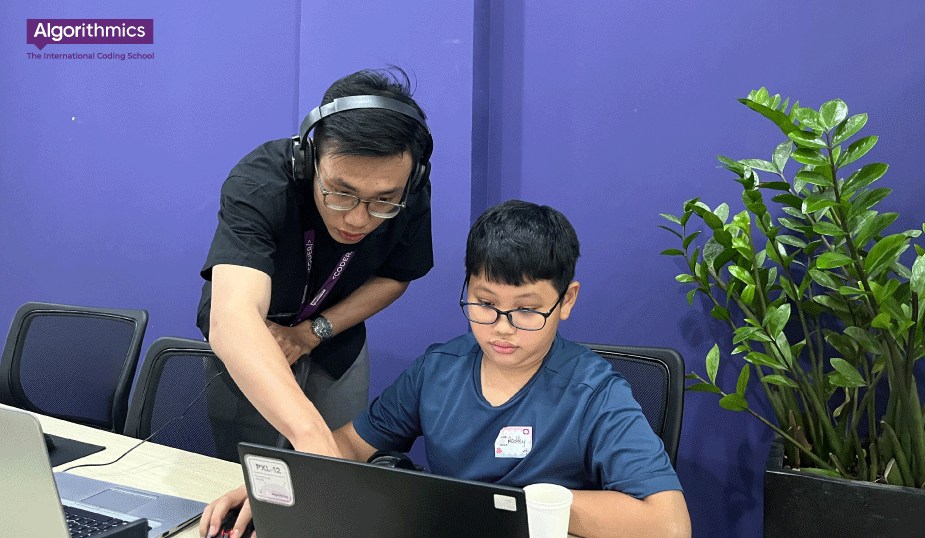
Teachers guide and direct students towards suitable learning projects that align with their abilities and learning objectives. They assist students in setting goals and planning for their projects. Additionally, teachers provide support in identifying necessary resources and tools to effectively execute the projects. When students encounter challenging tasks, teachers act as guides, assisting them in problem-solving.
Teachers create a conducive learning environment, providing opportunities and conditions for students to engage in deep and meaningful project work. They encourage students to seek self-discovery, explore, and experience through participation in real and meaningful projects. Throughout the project execution, students may face difficulties and challenges. In such cases, teachers play a supportive role, encouraging and motivating students to overcome these challenges. They offer positive feedback and constructive input to inspire students to persevere and successfully complete their projects.
After students have gained knowledge and initial guidance to embark on their projects, teachers become advisors and evaluators. They assess and grade the completed projects while advising students on their work. Teachers evaluate the progress and results of each project to ensure that students are advancing and completing the projects effectively.
In Project-based learning, teachers act as facilitators and mentors rather than simply knowledge providers. They empower students to take charge of their learning, explore, and apply knowledge in practical situations. This student-centered approach fosters critical thinking, problem-solving skills, and self-directed learning, preparing students to excel in the 5.0 era where adaptability, creativity, and technological literacy are highly valued.
To have a clearer understanding of the Project-based learning method, the following are the fundamental steps in the learning process:

The first step is to determine the specific learning project that students will undertake. Typically, students are given the freedom to choose topics that will stimulate their interest and engagement in the project. Teachers can assist students in selecting suitable and intriguing projects.
Students begin the learning process by formulating questions related to their project. They conduct research and gather information to explore the chosen topic or problem they are working on. Meanwhile, they also gather knowledge provided and transform it into useful resources to apply to their projects.
Students develop a plan to execute their project by defining clear objectives, tasks, and work schedules. They identify the necessary resources, tools, and methods required to complete the project. Teachers can provide guidance and support to help groups determine the essential "ingredients" needed for their projects.
Students carry out the tasks outlined in their plans and monitor the progress of their projects. They may work individually or in groups to complete the project. During this process, students encounter various challenges and learn diverse skills, such as conducting research, gathering information, converting knowledge into practical tools, collaborating effectively, and dividing responsibilities.

Upon completing the project, students present their outcomes and achievements. They may use various presentation methods, such as reports, presentations, videos, or tangible products, to share their work with others. Teachers evaluate students' progress and achievements during the Project-based learning. They provide feedback and comments on the effectiveness of the projects and the students' skills.
Project-based learning offers an immersive and engaging learning experience, where students actively participate in real-world projects. It empowers students to take ownership of their learning journey, encourages critical thinking, and nurtures problem-solving and collaboration skills. Throughout this process, students not only acquire knowledge but also develop essential soft skills that are highly valuable in the 5.0 era of technology and innovation.
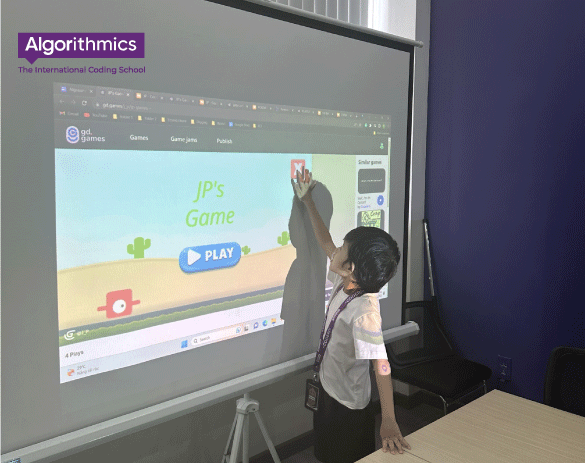
Algorithmics applies the Project-based learning method in the teaching process for children, enabling them to become technology leaders and explore knowledge in a fun and meaningful way.
In the courses at Algorithmics, children are encouraged to participate in individual and group technology projects. They take the initiative to ask questions and conduct inquiries to research various topics and issues in the field of technology. Afterwards, they plan and design their projects, setting specific objectives and tasks.
The project execution process allows children to create technology products such as mobile applications, games, or websites. They go through the steps of coding, designing interfaces, testing, and optimizing their products. This helps them develop programming skills, creative thinking, and problem-solving with confidence.
Moreover, working in groups during the project-based learning process also enhances children's teamwork, communication, and mutual support abilities. They learn how to listen to their teammates' opinions, make decisions together, and tackle challenges during project implementation.

With the Project-based learning method at Algorithmics, children not only actively learn knowledge but also develop crucial skills for the 21st century. Applying Project-based learning from an early age helps children form positive habits, gain highly applicable soft skills, and adapt to the dynamic changes of the 4.0 era.
To experience the Project-based learning method, parents can also register for a free assessment of their child's capabilities, technology skills, and logical thinking at Algorithmics HERE
Game development is now a subject of great interest for many parents. It not only helps children avoid game addiction and limit their gaming time but also allows them to develop technological skills and other cognitive abilities. Design and game development enable children to unleash their creativity while honing their critical thinking skills. There are numerous game development software and tool options available for kids. Algorithmics introduces some basic and user-friendly tools to make games for children.
Instead of spending time playing games, why not encourage your child to try their hands at game development? It's a fantastic way for them to explore and develop their thinking and skills.
When your child makes games, they will immerse themselves in the process of creating their own unique games. From building challenging gameplay to designing characters and crafting storylines, they'll learn how to think logically and find solutions to issues that arise during game development. This not only hones problem-solving skills but also helps them develop patience and perseverance in perfecting their creations.
Moreover, game development encourages your child to be mindful of the user experience. Creating a game requires understanding and meeting the needs of players. This fosters empathy and understanding of others, which is a crucial skill in the modern world.
nstead of spending time playing games, why not encourage your child to try their hands at game development? It's a fantastic way for them to explore and develop their thinking and skills.
When your child makes games, they will immerse themselves in the process of creating their own unique games. From building challenging gameplay to designing characters and crafting storylines, they'll learn how to think logically and find solutions to issues that arise during game development. This not only hones problem-solving skills but also helps them develop patience and perseverance in perfecting their creations.
Moreover, game development encourages your child to be mindful of the user experience. Creating a game requires understanding and meeting the needs of players. This fosters empathy and understanding of others, which is a crucial skill in the modern world.
Instead of merely consuming products made by others, game development allows your child to be part of the process of content creation and self-expression. This not only fuels their creativity but also opens doors for them to explore and experiment with new ideas.
One of the most popular tools
Instead of merely consuming products made by others, game development allows your child to be part of the process of content creation and self-expression. This not only fuels their creativity but also opens doors for them to explore and experiment with new ideas.
One of the most popular tools to make games for kids is Scratch. With an intuitive graphical interface, Scratch allows kids to create games by dragging and dropping code blocks. This helps them quickly get familiar with programming concepts and create simple games.

Developed by MIT Media Lab.
Programming language used: Block-based programming language.
Age range: Suitable for 5-year-olds and up.
Pros:
Cons:
G-Develop is a powerful and user-friendly game design platform that allows users to create games simply and quickly. With G-Develop tool, kids don't need to have complex programming knowledge. They can use the intuitive interface and drag-and-drop features to create unique and engaging games.

Developed by Florian Rival and iPower.
Programming languages used: Graphic programming language, JavaScript.
Age range: Suitable for 10-year-olds and up.
Pros:
Cons:
Tinkercad is a popular online 3D design platform. It is an intuitive 3D design and modeling platform widely used in education and programming communities. With a simple and user-friendly interface, Tinkercad allows users to create 3D models and program their actions and interactions.

Developed by Autodesk, a technology company.
Programming languages used: Does not use programming languages.
Age range: Suitable for 8-year-olds and up.
Pros:
Cons:
With Roblox, kids can create, share, and experience thousands of different interactive games. Additionally, Roblox has a thriving development community where independent developers can be creative and share ideas. Roblox provides users with a safe and diverse environment to explore, create, and socially interact in the virtual world.

Software developed by Roblox Corporation.
Programming language used: Lua.
Age range: Suitable for 9-year-olds and up.
Cons:

Unity is a powerful cross-platform game development that allows the creation of diverse 2D and 3D games on multiple operating systems and devices. With rich tools and features, Unity enables users to develop high-quality games, supports the integration of external resources, and has a large development community. Whether you are a beginner or an expert, Unity is an excellent choice for game development.
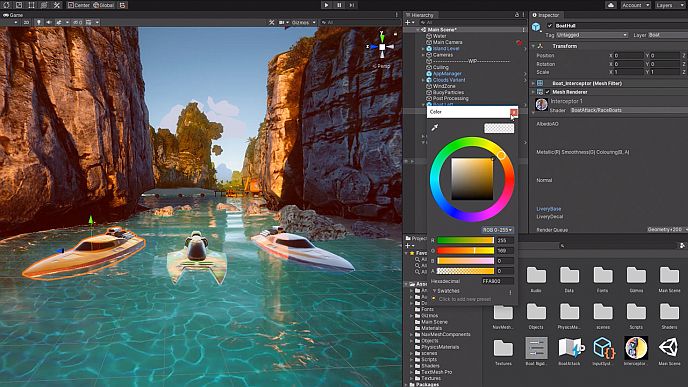
Software developed by Unity Technologies.
Programming language used: C#.
Age range: Suitable for 12-year-olds and up.
Pros:
Cons:
GameMaker Studio is a powerful and user-friendly game development platform. Children can create diverse 2D games quickly and easily without requiring deep programming knowledge. This platform provides an intuitive interface and drag-and-drop tools to design environments, characters, and game mechanics. With multi-platform publishing capabilities, GameMaker Studio allows you to deploy your games on various operating systems and devices.

Software developed by YoYo Games.
Programming language used: GML (GameMaker Language).
Age range: Suitable for 10-year-olds and up.
Pros:
Cons:
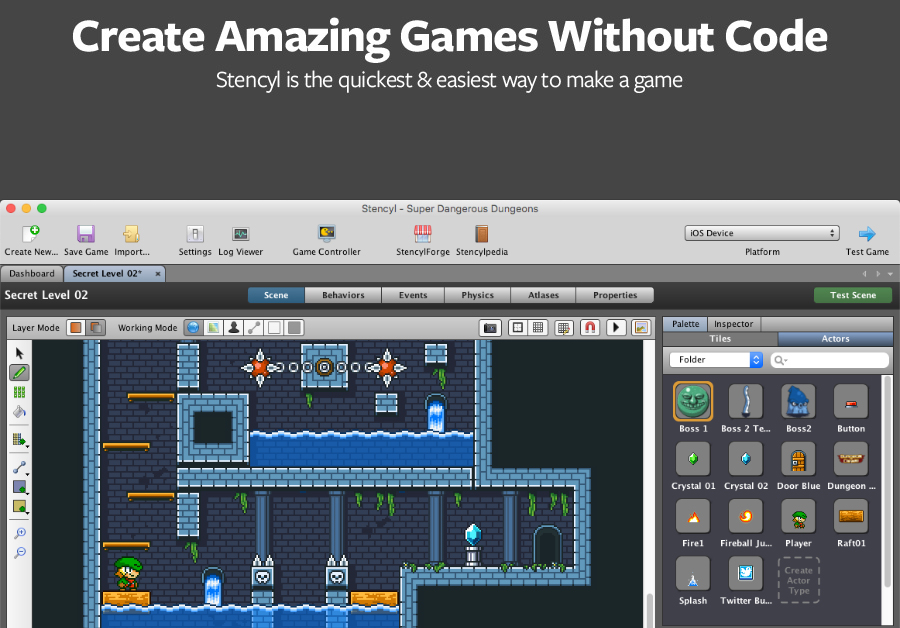
Stencyl is a powerful and user-friendly 2D game development platform based on block programming. With its intuitive interface and drag-and-drop tools, children can easily create unique 2D games. They can build game logic and functions by selecting and arranging programming blocks. With Stencyl, you can unleash your creativity and easily create your own distinctive 2D games.
Developed by Stencyl LLC.
Programming Language: Stencyl's Drag-and-Drop
Age Range: 8 years old and above
Pros:
Cons:
KTurtle is a platform that helps children learn programming through drawing images. With a simple and user-friendly interface, KTurtle allows children to explore and practice programming creatively. Children can draw simple images and control them by using basic programming commands. Learning programming through KTurtle helps children develop logical thinking, object-oriented thinking, and problem-solving skills.

Software developed by: KDE
Programming language used: Turtle Script
Age group: 8 years old
Pros:
Cons:
Code Monster is a programming learning platform designed for children to explore and interact directly with code. With a simple and engaging interface, Code Monster helps children develop logical thinking and creativity in programming.

Software developed by: University of Washington
Programming language used: JavaScript
Age group: 9 years old
Pros:
Cons:
Learning game programming helps children develop technological skills and creative thinking. It not only enables them to become creators of unique games but also fosters the development of various other skills. However, parents and educators need to choose suitable software that aligns with the child's abilities and interests to optimize the learning process and enhance programming skills. Learning game programming not only provides an enjoyable experience for children but also builds a strong foundation for their future.
To assess the child's abilities and technological skills, as well as finding the right programming language, parents can participate in a free evaluation session at HERE. From there, they can determine whether their child is suitable for this field or not.
Game development is now a subject of great interest for many parents. It not only helps children avoid game addiction and limit their gaming time but also allows them to develop technological skills and other cognitive abilities. Design and game development enable children to unleash their creativity while honing their critical thinking skills. There are numerous game development software and tool options available for kids. Algorithmics introduces some basic and user-friendly tools to make games for children.
Instead of spending time playing games, why not encourage your child to try their hands at game development? It's a fantastic way for them to explore and develop their thinking and skills.
When your child makes games, they will immerse themselves in the process of creating their own unique games. From building challenging gameplay to designing characters and crafting storylines, they'll learn how to think logically and find solutions to issues that arise during game development. This not only hones problem-solving skills but also helps them develop patience and perseverance in perfecting their creations.
Moreover, game development encourages your child to be mindful of the user experience. Creating a game requires understanding and meeting the needs of players. This fosters empathy and understanding of others, which is a crucial skill in the modern world.
Instead of merely consuming products made by others, game development allows your child to be part of the process of content creation and self-expression. This not only fuels their creativity but also opens doors for them to explore and experiment with new ideas.

One of the most popular tools to make games for kids is Scratch. With an intuitive graphical interface, Scratch allows kids to create games by dragging and dropping code blocks. This helps them quickly get familiar with programming concepts and create simple games.
Developed by MIT Media Lab.
Programming language used: Block-based programming language.
Age range: Suitable for 5-year-olds and up.
Pros:
Cons:
G-Develop is a powerful and user-friendly game design platform that allows users to create games simply and quickly. With G-Develop tool, kids don't need to have complex programming knowledge. They can use the intuitive interface and drag-and-drop features to create unique and engaging games.
Developed by Florian Rival and iPower.
Programming languages used: Graphic programming language, JavaScript.
Age range: Suitable for 10-year-olds and up.
Pros:
Cons:
Tinkercad is a popular online 3D design platform. It is an intuitive 3D design and modeling platform widely used in education and programming communities. With a simple and user-friendly interface, Tinkercad allows users to create 3D models and program their actions and interactions.
Developed by Autodesk, a technology company.
Programming languages used: Does not use programming languages.
Age range: Suitable for 8-year-olds and up.
Pros:
Cons:
With Roblox, kids can create, share, and experience thousands of different interactive games. Additionally, Roblox has a thriving development community where independent developers can be creative and share ideas. Roblox provides users with a safe and diverse environment to explore, create, and socially interact in the virtual world.
Software developed by Roblox Corporation.
Programming language used: Lua.
Age range: Suitable for 9-year-olds and up.
Cons:
Unity is a powerful cross-platform game development that allows the creation of diverse 2D and 3D games on multiple operating systems and devices. With rich tools and features, Unity enables users to develop high-quality games, supports the integration of external resources, and has a large development community. Whether you are a beginner or an expert, Unity is an excellent choice for game development.
Software developed by Unity Technologies.
Programming language used: C#.
Age range: Suitable for 12-year-olds and up.
Pros:
Cons:
GameMaker Studio is a powerful and user-friendly game development platform. Children can create diverse 2D games quickly and easily without requiring deep programming knowledge. This platform provides an intuitive interface and drag-and-drop tools to design environments, characters, and game mechanics. With multi-platform publishing capabilities, GameMaker Studio allows you to deploy your games on various operating systems and devices.
Software developed by YoYo Games.
Programming language used: GML (GameMaker Language).
Age range: Suitable for 10-year-olds and up.
Pros:
Cons:
Stencyl is a powerful and user-friendly 2D game development platform based on block programming. With its intuitive interface and drag-and-drop tools, children can easily create unique 2D games. They can build game logic and functions by selecting and arranging programming blocks. With Stencyl, you can unleash your creativity and easily create your own distinctive 2D games.
Developed by Stencyl LLC.
Programming Language: Stencyl's Drag-and-Drop
Age Range: 8 years old and above
Pros:
Cons:
KTurtle is a platform that helps children learn programming through drawing images. With a simple and user-friendly interface, KTurtle allows children to explore and practice programming creatively. Children can draw simple images and control them by using basic programming commands. Learning programming through KTurtle helps children develop logical thinking, object-oriented thinking, and problem-solving skills.
Software developed by: KDE
Programming language used: Turtle Script
Age group: 8 years old
Pros:
Cons:
Code Monster is a programming learning platform designed for children to explore and interact directly with code. With a simple and engaging interface, Code Monster helps children develop logical thinking and creativity in programming.
Software developed by: University of Washington
Programming language used: JavaScript
Age group: 9 years old
Pros:
Cons:
Learning game programming helps children develop technological skills and creative thinking. It not only enables them to become creators of unique games but also fosters the development of various other skills. However, parents and educators need to choose suitable software that aligns with the child's abilities and interests to optimize the learning process and enhance programming skills. Learning game programming not only provides an enjoyable experience for children but also builds a strong foundation for their future.
To assess the child's abilities and technological skills, as well as finding the right programming language, parents can participate in a free evaluation session at HERE. From there, they can determine whether their child is suitable for this field or not.