


Programming is a subject that helps children develop logical thinking, creativity, and problem-solving skills. However, choosing the right programming languages for children can be a challenge for Parents. This article will help you understand the importance of programming for children, the appropriate age to start, and the top 5 easy-to-learn programming languages for kids.
As our world becomes more advanced and technology continues to improve, technology skills and programming knowledge becomes increasingly important. By acquiring programming knowledge, children not only increase their opportunities of catching trends but also enhance their ability to integrate globally.
Karan Bajaj stated in 2018 in Mumbai: "Before the first Industrial Revolution, less than 10% of schools taught mathematics. And then, every school started teaching math because it became a key subject for the revolution. Nowadays, we are in the midst of the fourth Industrial Revolution - Industry 4.0 - and schools have realized that 'programming' is an important subject no less than any other subject."

Moreover, programming is a subject that stimulates the development of critical thinking and other important soft skills in children. Some benefits of teaching children to programming at an early age include developing logical thinking, fostering creativity, curiosity, promoting active problem-solving, enhancing concentration, and nurturing essential soft skills such as communication and teamwork.
Programming is a valuable subject that offers numerous benefits for children, including the development of critical thinking, creativity, and important soft skills. By introducing children to programming early on, parents can provide them with a solid foundation for future learning and success in the digital age
.
According to The Times Of India, Mark Zuckerberg said that his daughter started programming at the age of 3. Additionally, in India, many primary school-aged children are already capable of coding. So, at what age should children be exposed to programming? According to education and child psychology experts at Algorithmics, children can start learning programming as early as 5 years old.
There are several reasons why children can learn programming from the age of 5:
Development of critical thinking and cognitive habits: At this age, stimulating thinking through programming helps children develop proactive, logical, creative, and problem-solving thinking habits.
Enhancing mathematical skills: Programming is closely tied to mathematics. Learning programming from a young age helps children develop mathematical abilities, such as numerical concepts, logic, and problem-solving.
Building a foundation from an early age: Technology is rapidly advancing, and programming has become an essential skill in many professions. Learning programming from a young age provides children with a solid foundation, enabling them to easily adapt to future technological advancements.
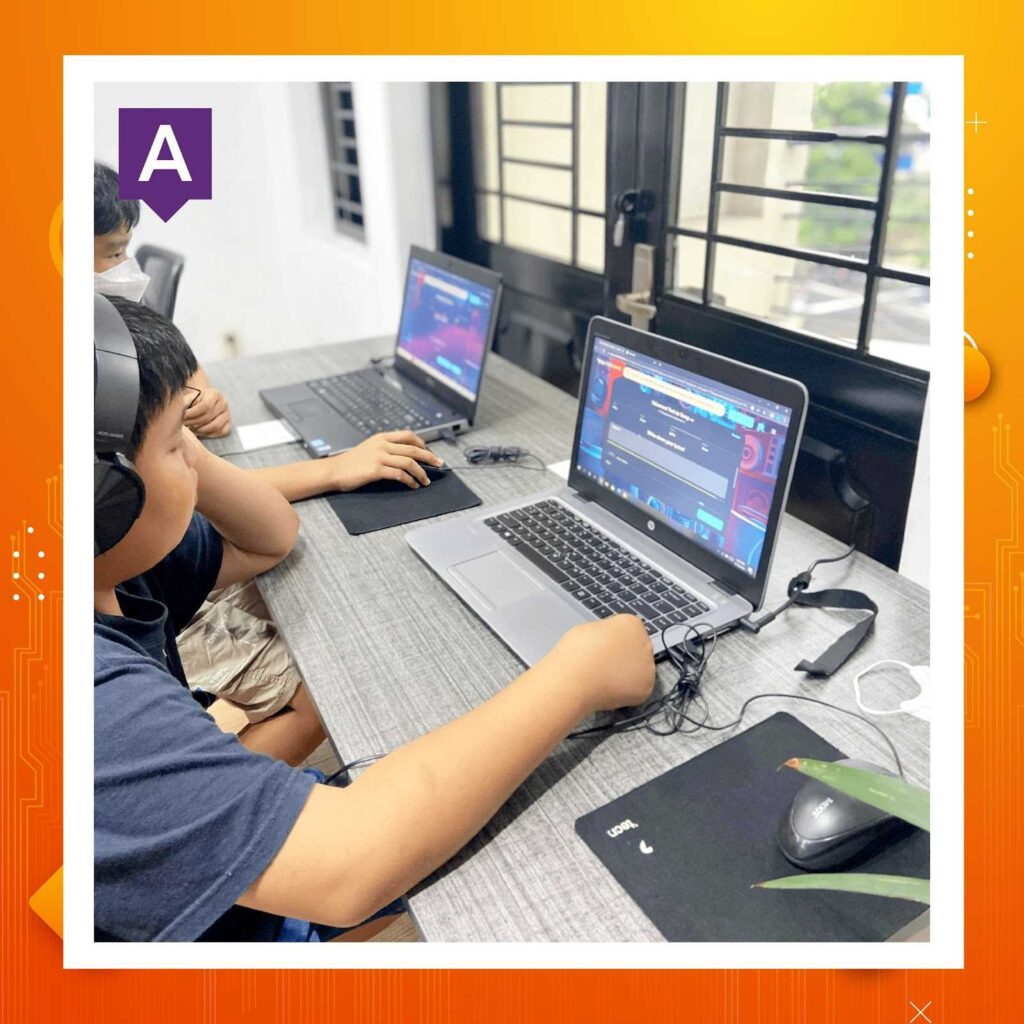
However, it is important to note that learning programming at the age of 5 should be taught by adult guidance and supervision. The appropriate teaching methods and learning tools are essential to ensure effective learning.
To make programming easily accessible for children, there are numerous languages and platforms available today that are attractive, engaging, and easy to learn. These platforms function like games, stimulating children's curiosity and desire to learn. With each lesson and increasing level of difficulty, children gather more knowledge and acquire new skills. Here are 5 programming languages that are easy to learn, accessible, and highly applicable for children.
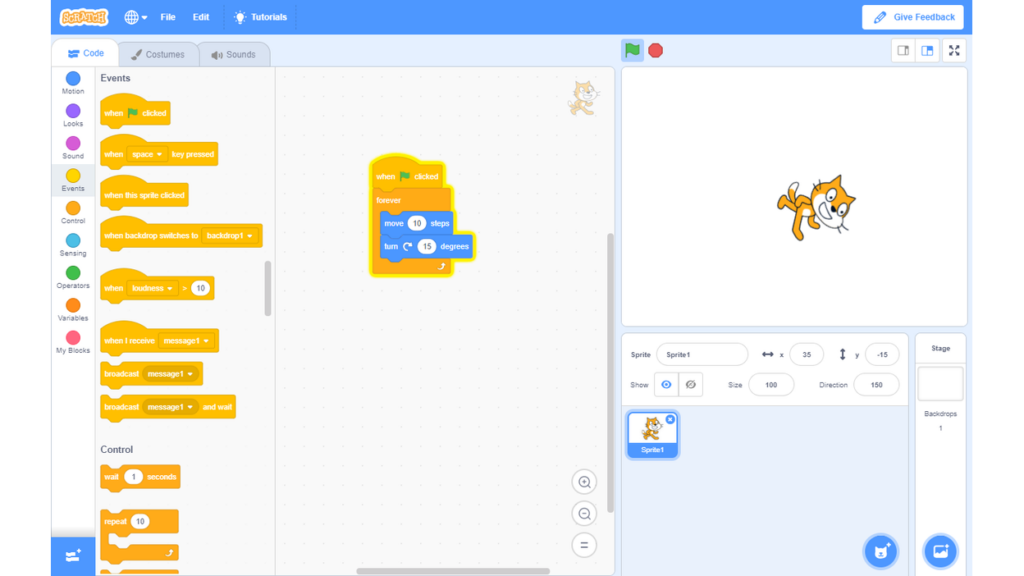
Scratch, also known as a block-based programming language, was developed by MIT (Massachusetts Institute of Technology). Scratch allows children to create creative projects such as games and interactive activities. Moreover, this language helps children understand basic programming concepts.
Recommended Age for Learning Scratch: 5 years old
User-Friendly Interface: Scratch has a friendly and easy-to-use interface for children. They can drag and drop coding blocks to create programs, control characters, and generate dynamic effects.
Diverse Coding Blocks: Scratch provides a wide range of coding blocks including conditions, loops, sounds, motion, and more. Children can combine these blocks to create complex actions for characters and objects in their projects.
Scratch Community: Scratch has a large online community where children can share their projects, explore others' projects, and interact with one another.
Cultivates Critical Thinking and Problem-Solving Skills: Scratch helps children develop logical thinking and problem-solving abilities. They need to think and construct a series of commands to complete specific tasks. Additionally, children can showcase their creativity and turn ideas into reality by designing games or interactive activities according to their preferences.
Limited Application Scope: Scratch is designed for creating simple applications and games. As a result, when children have more advanced knowledge and want to develop complex applications, they may encounter limitations in the scalability and flexibility of Scratch.
Limited Processing Capability: Since Scratch is a visual and block-based programming language, it may have limitations in handling complex tasks and exhibit lower performance for large-scale projects. This might make children feel restricted when they want to implement more complex ideas.
Limited Depth of Programming: Scratch can only help children understand and practice basic programming concepts. To pursue in-depth programming knowledge, they will need to explore and learn other programming languages.
Lua is a scripting programming language. It was created in 1993 by Roberto Ierusalimschy, Luiz Henrique de Figueiredo, and Waldemar Cele. This language is built on the C programming language. Lua is known for its simplicity, compactness, and ease of learning. Furthermore, Lua can easily be integrated into programs written in other programming languages.
Recommended Age for Learning Lua: 9 years old

Simplicity and Compactness: Lua is designed to be user-friendly, making it easy for children to approach. With simple syntax and fewer complex rules, children can quickly grasp and apply the knowledge to create basic programs.
Easy Integration: Lua has the ability to integrate into various applications and games. Children can use Lua to program games, mobile applications, and even extend functionality for other platforms.
Large Community: Despite being a small and simple programming language, Lua has a large community. Children can explore instructional resources in the support library, seek assistance from community members, and learn from others.
Cross-Platform Operation: Lua can operate on multiple platforms, including computers and mobile devices. This allows children to explore and be creative across different platforms in a flexible manner.
Limitation in Developing Complex Applications: Lua is often used for small-scale applications and simple games. Therefore, if children advance and wish to develop more complex applications or delve deeper into programming, they may encounter limitations in terms of scalability and flexibility with Lua.
Limited Dedicated Learning Resources for Children: Compared to some other programming languages designed for children, Lua has fewer dedicated instructional resources and courses specifically tailored for children.
Syntax Complexity for Young Children: Although Lua is designed to be easy to learn, for very young children, the syntax and rules of the programming language can still be challenging and prone to misunderstanding. Support and supervision from adults are needed to ensure children understand and use it correctly.
HTML (HyperText Markup Language) and CSS (Cascading Style Sheets) are two fundamental and widely-used languages used for building websites. Although they are separate programming languages, they are like the left and right arms of a front-end developer, complementing each other. With HTML & CSS, children can explore and create simple and interesting web pages.
Recommended Age for Learning HTML & CSS: 10 years old
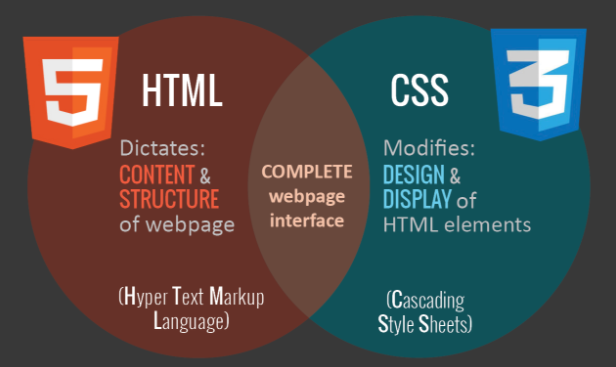
Simplicity and Ease of Learning: HTML & CSS have simple and understandable syntax, making programming learning enjoyable and easily grasped. Children can create and customize elements, text, images, and colors on a web page.
Visual Interface: HTML & CSS allow direct visual representation of code results through web browsers. Children can see immediate changes and experiment with different elements to create web pages according to their preferences.
High Applicability: HTML & CSS are widely used in web design. From creating personal websites to developing complex web applications, learning HTML & CSS provides children with a solid foundation to further develop programming and web design skills. By learning this language, children can shape their career path in programming and web design.
Not Immediately Applicable to Real-World Scenarios: HTML & CSS mainly focus on the structure and display of web pages. If children want to create complex web applications with high logical processing requirements, they will need to combine HTML & CSS with other programming languages such as JavaScript.
Dependence on External Graphic Design: Although CSS allows customization and design flexibility for web pages, creating dynamic effects and complex designs may require dependence on external tools and other aspects such as graphics and UX/UI techniques.
Requires Patience and Practice: HTML & CSS require patience and continuous practice to master the syntax and understand how to create web pages according to desired outcomes. Children need time and support to realize their ideas and create web designs they can be proud of.
Python is one of the programming languages that represents the 4.0 era. It has been around since 1990 and has increasingly established its position in the programming world. It is considered a high-level language used for web design, task automation, and data analysis. Python is versatile, widely applicable, and easy to use. Consequently, it is a popular choice for many children learning programming.
Recommended Age for Learning Python: 11 years old

Easy to Learn, Read, and Understand: Python is designed with a simple and clear syntax, making it easy for children to grasp programming concepts. This creates favorable conditions for children to quickly start writing code and implementing programming projects.
Large Community and Easy Support: Python has a vibrant and large community of programmers. Children can find tutorial resources, source code examples, and support from community members. This helps children overcome challenges and develop their programming skills quickly.
Diverse Applications: Python can be used in various fields, from game development and mobile applications to data processing and artificial intelligence. This allows children to explore practical and interesting applications of programming through Python.
Rich Library Support: Python comes with many powerful libraries that help learners solve problems and perform complex functions easily. Libraries such as Pygame enable children to create simple games, and the NumPy library supports data processing and analysis.
Slower Speed Compared to Other Programming Languages: Python is an interpreted language and may run slower than compiled languages like C++ or Java. This can impact the performance and execution speed of more complex applications.
Limitations in Mobile App Development: Although Python can be used for mobile app development, it is not the primary language used in this field. This may limit the development capabilities and compatibility of Python with certain mobile platforms.
C# (also known as C Sharp) is a simple programming language. It was introduced by .NET in 2000 by Microsoft. It is considered a modern, powerful, and versatile programming language that can be applied across multiple platforms. With C#, children can explore and create applications, games, and develop simple software.
Recommended Age for Learning C#: 12 years old

Versatile and Flexible: C# can be used to develop various applications, from desktop applications and mobile apps to web applications. This allows children to explore different areas of programming and create diverse projects.
Clear and Understandable Syntax: C# is designed with a clear and close-to-natural language syntax, making it easy for children to read and write code. This helps children quickly grasp and understand fundamental programming concepts.
Strong Microsoft Community Support: C# is developed by Microsoft and receives strong support from the company. Children can easily find tutorial resources, source code examples, and support from the C# programming community. This creates favorable conditions for children to learn and develop their programming skills.
Graphics and Game Development Strength: C# has a strong integration with Unity, a popular game development platform worldwide. Children can use C# to create various engaging games, from simple games to complex ones with 3D graphics.
Advanced Learning Content: Although C# has a simple syntax, understanding advanced programming concepts and object-oriented concepts may require continuous learning and practice. Children need time and support to master these concepts.
Dependency on the .NET Framework: C# is a language developed on the Microsoft .NET platform. This means that children need a suitable development environment and support to work with C#.
Introducing children to programming at a young age not only helps them develop logical thinking and creativity but also opens doors and builds a foundation for their future. The five programming languages mentioned above are suitable for different age groups and learning purposes of children. Even without a specific career direction in programming, children can still learn this discipline to develop their thinking skills and soft skills.
To assess your child's technology capabilities and skills, as well as to find the appropriate programming language for them, you can participate in a free assessment session at HERE. This will help you understand if your child is suited for this field or not.
How is your family's summer? Why not join Algorithmics to make an exciting summer with coding courses for children, a series of energetic activities and events that only happen once in July? Explore now to not miss out on the interesting things in July!
Coder Camp is a summer program designed to help children enhance their technology skills and develop 21st-century soft skills! It is not just a coding course for kids, but also an opportunity for them to recharge their energy after a long school year, absorb valuable knowledge about technology and soft skills, and create unforgettable memories with new friends! Moreover, Coder Camp 2023 also offers unique and exciting field trips that are only available this summer!

Have you heard of Sparx - A Virtuo Studio? If you're a fan of blockbuster movies like The Avengers, Teenage Mutant Ninja Turtles, Star Wars VII, or games like Call of Duty, Fallout, Final Fantasy, then you must know about Sparx - the world-renowned animation and visual effects studio.
At Coder Camp 2023 - the summer coding program for children, they not only acquire core knowledge and highly applicable soft skills but also have the exclusive opportunity to:
Target audience:

JP World is no longer a strange name for parents and children. However, JP World within the realm of Coder Camp is completely different! When participating in Coder Camp 2023, your child will embark on an "extracurricular train" to enter the parallel hi-tech world! Here, they will engage in activities such as:
Target audience:
Note: The final programming summer course of Coder Camp 2023 will take place from July 17, 2023. Don't miss out, parents!
For detailed information, please visit: HERE
For Algorithmics, a great summer is one where children learn a new skill, relax after a stressful year of studying, and explore a new place! That's why, in this July, Algo brings an amazing experiential trip for all Algoers: 24 hours transforming into Choco-tech artists!

During these 24 hours, children will visit and participate in activities at Alluvia Farm - the prosperous and abundant Cacao Alluvia garden in Cho Gao. Here, they will:
Event details:
Learn more at HERE
The popular Coder Pack that has fascinated many Algorithmics' young students now has only 10 sets left! Do parents want to own one of these 10 gifts? Hurry to Algorithmics to get yours!
Applicable conditions:

In addition, parents can also register for a free session of competency assessment and technology skills evaluation for children. From there, you can understand if your child is suitable for this profession or not. Learn more at HERE
Learning coding is not just a mere subject to study; it is also an amazing skill that opens up many opportunities for us in today's technological world. And one surprising thing is that anyone can learn coding. Ethan, a Python Algoer, is a typical example of this. Let's explore Ethan's journey of discovering the world of programming!
Ethan was one of the top Python graduates at Algorithmics. Unlike other students, Ethan started to learn code quite coincidentally and unexpectedly.
During a volleyball tournament held at Ethan's high school, sponsored by Algorithmics, the winning team would receive valuable course scholarships at Algorithmics. And Ethan was one of them.
He started learning coding in the 10th grade and began with a Python course. Initially, he only wanted to experience it because of the scholarship. Ethan had no intention or basic foundation in coding. On the contrary, he had a business-oriented direction following his family's path. But after learning coding, Ethan realized that it wasn't as difficult as people often say. Programming is a skill, and this subject helps him apply many things in learning and life, while also supporting his business aspirations.
Now let's summarize the valuable lessons and positive energy that Ethan wants to spread to young people!
Even Ethan have no background, passion, or different career aspirations, he could still have an amazing experience by receiving a coding scholarship at Algorithmics. Just like peers and the majority of people, Ethan also used to think that coding was only for talented students or those with an inclination and passion for technology. But when he started learning with Algo, Ethan gained a different perspective: Programming is not as difficult as we think!

The interesting thing is that anyone can learn coding, regardless of their background, passion, or different directions. We can all access coding education without needing to be a math prodigy or have advanced technology knowledge. All you need is a thirst for learning, patience, and readiness to face new challenges. And once you embark on the journey of exploring the world of programming with Algo, you will discover many exciting skills that you can develop and realize that you are better than you thought.
Unlike regular subjects in school, programming is considered an important skill, especially in the era of Industry 4.0. Coding and technology skills can be applied in various fields.
For students, this skill contributes significantly to developing their thinking abilities, cultivating proactive habits in learning and research, and optimizing the use of internet resources for finding materials, expanding knowledge, and reducing study time.

For students and professionals, technology and programming skills enable us to easily adapt to new tools, quickly update information, and avoid falling behind. Moreover, these skills optimize tools, time, and enhance work efficiency.
Furthermore, the common point we see is that technology and programming skills can be seen as a combination of various soft skills such as logical thinking, self-learning skills, exploration, creativity, focus, and more. Therefore, by developing technology and programming skills, they will synergize and develop other skills.
You may not have a career orientation in the field of information technology, but learning coding is still something you should do. Mastering the fundamentals of programming helps us understand technology better, which is the "golden key" to access new knowledge and tools in the era of Industry 4.0. Moreover, it is a skill that can help you succeed in any profession. Additionally, developing technology skills also improves other skills such as logical thinking, problem-solving, proactivity,...

For Ethan, even though he didn't change his initial business direction, he is still determined to complete the Python course. Not because of passion, but because he sees the benefits that programming can bring. Ethan also recognizes his own development, from thinking patterns to other soft skills.
To apply and remember knowledge and skills in the long run, regular practice and bringing "raw knowledge into practice" is the most effective method. And to implement this effective method, the first thing to do is: Take action. Remember that opportunities won't come to us if we don't take action.

We may not meet the requirements for a certain job position, but we might exceed expectations. But none of it will become a reality if we don't take action. And it's the same for Ethan! Opportunities won't come to Ethan if he just thinks and waits. And once he decided to take action, even with a small step, Ethan opened many doors of opportunity for himself. Not only doors of opportunity, but also brought various great lessons and experiences for Ethan.
Learning programming is not as difficult as you think. Everyone can access and learning coding, regardless of their abilities or initial interests. Ethan is a typical example of starting programming without needing initial direction or passion. By accumulating technological skills and great experiences, you can open future doors with coding. And finally, to achieve a goal, the first step is "take action!". We may fail or succeed, but one thing for sure is that you will gain "lessons".
In the era of rising artificial intelligence, the replacement of traditional careers is inevitable. Advanced technology and automation trends are transforming the way we work and interact with each other. Let's explore 8 careers that experts predict will disappear in the future, easily replaced by A.I. and technology.
With the rise of electronic payment methods and automated payment systems such as e-wallets and self-service checkout machines. The role of traditional cashier careers is being replaced. Automated systems are not only fast and convenient but also help businesses save costs.
Additionally, the position of salespeople in retail stores is also being threatened. Users can now conduct transactions and manage finances remotely through mobile apps and websites, minimizing direct interaction with staff. Moreover, with the development of e-commerce channels, customers nowadays prefer online shopping platforms.

According to CNBC, retailers and restaurants are exploring robots and technological devices that can replace human workers. This optimization of costs and customer waiting time will lead to better experiences for customers. Molly Harnischfeger, Customer Insight Director at AlixPartners. Stated, "Diners and shoppers, who are impatient with long wait times and unsatisfactory service, welcome these changes."

Automation technology and artificial intelligence are replacing the role of traditional customer service representatives across various sectors. Chatbots and automated service robots can now quickly address customer requests.

According to Harvard Business Review, the application of A.I. has seen significant development in recent years, particularly after the Covid-19 pandemic. Service robots are gradually establishing their position in the customer service industry. They help reduce costs, improve efficiency, and automate mundane tasks. These robots are available 24/7 without the need for sick leave or holidays, ensuring dedicated customer care for businesses. However, for optimal performance of service robots, proper design, implementation are essential, this aspect can be easily improved over time.
The finance industry, a crucial traditional sector, is facing the potential replacement by Artificial Intelligence (A.I.). The rapid development of technology, powerful computational capabilities, and automation of A.I. have significantly reduced the time required for accurate financial analysis and information processing.

Currently, financial companies and banks are leveraging A.I. to automate tasks such as credit analysis, risk management, stock trading, and market analysis.
Muro, a researcher at the Brookings Institution, states, "A.I. can identify market trends, highlight which investments in an investment portfolio are performing better or worse, convey all of that, and then use various other data forms from a financial company to make better mixed investment predictions."
However, the use of A.I. in the finance industry also faces several challenges. While A.I. can process data quickly, it cannot completely replace humans in making strategic decisions and evaluating non-financial factors such as culture, politics, and market psychology.
Therefore, it is predicted that the finance industry will undergo transformation by combining human expertise with A.I. Financial experts will need to adjust their knowledge and skills to work alongside new technologies, harnessing the power of A.I. to enhance performance and make better decisions in a rapidly changing economic environment.
The development of ChatGPT and artificial intelligence tools has brought significant impacts to the field of Marketing and Media. From generating automated content to data analysis and optimizing marketing strategies.
In the field of Media, ChatGPT and Chatbots can quickly create unique and automated content, including articles, videos, music, and graphic design, without the need for human intervention. This saves time and manpower for media companies while meeting the increasing demand for diverse and personalized content from users.

In the field of Marketing, A.I. can analyze customer data, market trends, and influencing factors to propose effective marketing strategies and enhance customer interactions. Marketing companies are increasingly using A.I. tools to optimize advertising campaigns.
According to Forbes, Kristian Hammond, the Chief Scientist of Natural Sciences, stated in an interview with the BBC: "In 15 years, 90% of news will be written by machines." German publisher Axel Springer has also announced plans to "use only digital technology," including reducing staff to support "modern technology and automation." Another study by Salesforce showed that in the marketing world, 84% of marketers used AI in 2020, a 29% increase compared to 2019.
Although A.I. brings many benefits to the Media and Marketing industries, it also poses challenges. A.I. cannot fully understand and respond to human emotions and human factors. Creativity and imagination are also important aspects where humans play a crucial role.
Therefore, it is predicted that the Media and Marketing industries will witness a combination of human and A.I. Efficient marketers will be those who effectively leverage the capabilities of A.I. to analyze data, propose, and execute strategies.
In the future, technology and artificial intelligence (A.I.) have the potential to replace certain jobs in the legal field. Some positions in the legal industry may be impacted by the development of A.I., such as automated legal counseling, legal data analysis, comparison of legal documents, or even handling some simple cases. A.I. has the ability to process and analyze large amounts of information quickly and more accurately than humans, resulting in significant efficiency and time savings.
According to Forbes, A.I. will have a major impact on the legal industry. In the future, law firms will have fewer administrative tasks and require fewer staff members. Lawyers and legal professionals will have to write less, read less, and search less. The requirements for positions related to the legal field will also be higher and more selective.
When legal professionals work efficiently and optimally, it means that we will need fewer lawyers. Therefore, the legal industry will face the reality that some lawyers may lose their jobs. Research from Princeton even suggests that the legal field is one of the most vulnerable industries in the A.I. revolution. There is also a risk of losing value as machines can perform most tasks that lawyers used to do.

However, completely replacing the legal field with A.I. is still a challenging issue and requires a combination of technology and legal expertise. The role of individuals in the legal field remains essential and cannot be fully replaced by A.I. The work of lawyers, legal assistants, and legal experts requires deep knowledge, analytical thinking, evaluation of complex situations, and the ability to interact with people in a sensitive and flexible manner. In addition, the human factors of ethics and moral reasoning in the legal field are aspects that current A.I. cannot fully meet.
The accounting field is susceptible to complete replacement by artificial intelligence. However, the industry will be influenced and undergo transformations. A.I. has the ability to automate accounting tasks but still requires human supervision to ensure accuracy and effectiveness. Accounting work will gradually shift towards data analysis, strategic decision-making, and providing detailed information to management.
In several studies, jobs related to accounting are expected to decrease by 8% by 2024 (according to Business Insider). Most accounting tasks are being automated through advanced tools and software such as QuickBooks, FreshBooks, and Microsoft Office. Not only are these tools much cheaper compared to the salary of a person, but they also offer higher accuracy.

"Some accountants worry that A.I. will replace them. However, this is an opportunity for accountants who know how to leverage A.I. software. They will replace accountants who do not know how to use software and fail to keep up with new knowledge" - Jeff Dernavich, Vice President of Product at LeaseQuery.
In the era of Industry 4.0, this industry is being influenced by technology and artificial intelligence. Market research analysts play an extremely important role in developing messaging, content, and products. Technology and A.I. have the ability to automate some research tasks, data analysis, user information synthesis, and survey measurements easily without the need for humans. This helps save time and enhance information processing capabilities. For example, GrowthBot can conduct market research on businesses and competitors using a simple Slack command.

"A.I. is very good at data analysis and predicting outcomes. That's why market research analysts can be easily affected by changes driven by A.I." - Muro stated.
However, technology and A.I. can support the synthesis and analysis of big data, identify trends and patterns, generate forecasts, and propose strategies. However, the ability to perceive and understand cultural, social, and economic factors, and apply specialized knowledge to provide deeper insights, remains a distinct role for humans. Market research and analysis require creativity, analytical thinking, and deep industry knowledge, as well as interaction with stakeholders, which AI still cannot fully replace.
Some people believe that teachers can be replaced by A.I. in the future. Artificial intelligence technologies are advancing and capable of providing automated educational solutions. A.I. can deliver learning content, assessments, and personalized guidance to students effectively. It has the ability to interact and respond quickly to the learning needs of each student. Furthermore, A.I. can process large amounts of data, analyze it, and develop better learning programs.
Pengcheng Shi, an associate dean in the department of computing and information sciences at Rochester Institute of Technology, suggests that teachers should consider the possibility of their work being replaced by ChatGPT in an interview with the New York Post: "ChatGPT can easily teach current classes. Although ChatGPT has many shortcomings, such as incorrect and inaccurate knowledge, in the future, it will become smarter and rapidly improve once we train it."

However, other perspectives emphasize the irreplaceable role of teachers in the teaching process. The direct interaction between teachers and students, the ability to inspire, guide, and motivate students cannot be replaced by technology. Teachers have the ability to quickly recognize and respond to the needs and abilities of each student, creating a supportive learning environment and promoting the comprehensive development of students.
Shannon Ahern, a high school math and science teacher, is currently using ChatGPT in her lesson plans and teaching strategies. In an interview with Insider, she states that she is not afraid of being replaced by technology: "Teachers are always needed because teaching requires interaction and human-to-human relationships."
Despite the advancements in technology and artificial intelligence becoming increasingly intelligent, there are still positions that cannot be easily replaced by AI. However, this does not mean that the human element is not needed. Regardless of the circumstances, humans remain crucial and should be prioritized in all positions, industries, and businesses. To maintain and further develop in our roles, we need to continuously strive to improve our skills, embrace new knowledge and tools, and keep up with societal changes to avoid falling behind. Similar to the field of market analysis, when combined with AI tools, analysts can not only save time and optimize results but also make more accurate predictions. Technology and AI are both challenges and new opportunities for individuals.
Furthermore, parents can also register for a free assessment session for their children's abilities, technology skills, and logical thinking. This can help determine if their child is suitable for this profession at HERE
Technology and online games, especially Roblox, are occupying a significant portion of children's time and attention nowadays. Instead of letting our children simply consume these technologies, why don't we turn them into tools for their development and creativity? Moreover, children today have the capability to design Roblox as early as the age of 10. Let's explore with Algorithmics the measures to make technology and online games a stepping stone for our children's future, rather than just using them passively!
In contrast to the past, where children were familiar with traditional online games, today's children are more acquainted than ever with Roblox. Additionally, Generation 4.0 children have been using technological devices since a very young age. Technology is gradually asserting its role in their daily lives, and Roblox is seen as a popular form of entertainment.
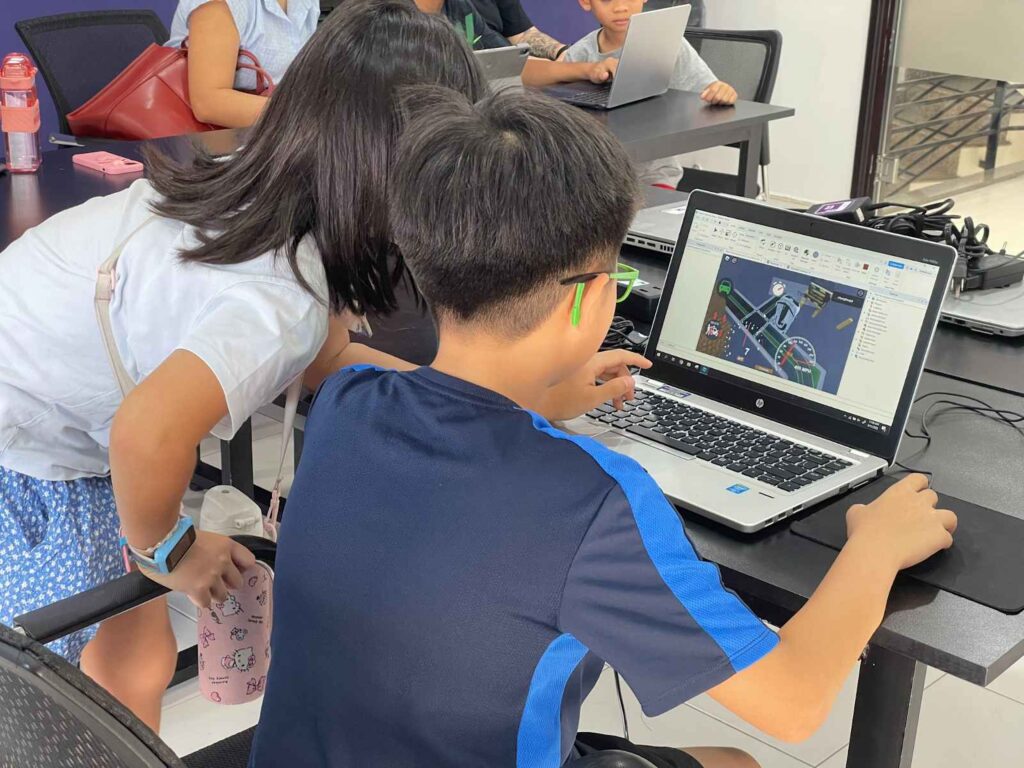
However, playing Roblox continuously and using electronic devices without utilizing them can impose limitations on the development and creativity of children. There needs to be a proper approach to transform technology into a useful tool.
Therefore, many parents believe that allowing children to have early exposure to technology and excessive gameplay of Roblox can lead to addiction, health issues, and neglect of academic responsibilities. As a result, parents often resort to strict control and restriction when they see their children playing Roblox, using computers, or mobile phones. But is this the right course of action?
Restricting children from using phones, computers, and playing games can have "side effects." Prohibiting children can create a sense of resistance, curiosity, and stimulation, resulting in a "forbidden fruit effect" in children.
Furthermore, prohibiting children can also make them feel insecure and stressed. According to Stephan Neumeier, the Managing Director of Kaspersky in the Asia Pacific region, "When peers of the same age can play games that they cannot, children may feel left out. Additionally, electronic games are not only entertaining but also offer many benefits for children. Especially when properly nurtured and educated, children can easily develop."
Despite parents' concerns about the misuse and negative impact of technology, the reality is that technology and online games bring more significant benefits to children than parents may think! According to Thanh Nien newspaper, here are 5 surprising benefits that online games and devices like phones and computers bring to children.
According to a study conducted by the University of Michigan on over 500 12-year-old children who played online games, online games have significantly contributed to the development of creativity in both boys and girls.
Not only does playing games foster creativity, but some games also encourage children to develop their problem-solving skills and critical thinking abilities. Roblox, in particular, stands out in this aspect. The game requires children to think flexibly, come up with new solutions, and be creative in overcoming challenges within the game. This helps children develop independent thinking skills and become innovative thinkers in the real world.

Please select a form
Playing games can help improve decision-making skills in children. Games often present complex situations that require quick and accurate decision-making. Children need to identify objectives, analyze available options, and choose the best course of action within a limited time frame. This process hones their ability to evaluate, compare, reason, and make effective decisions.
Furthermore, playing games also allows children to experience failure and learn from mistakes. Children are required to make decisions, but sometimes those decisions do not yield the desired results. From these experiences, children have the opportunity to draw lessons, improve their ability to analyze situations, and make better decisions in the future.
According to a research program called ABCD in the United States, which involved 9,855 children aged 9-10 using technology devices, the study revealed that children spent approximately 2.5 hours per day watching TV, 1 hour playing video games, and 0.5 hours on social media. After 2 years, more than 5,000 children showed an IQ growth rate 2.5 times higher than the average. Interestingly, these 5,000 children spent more time playing games than other children.

Playing games stimulates brain connectivity and activity. When playing games, the brain has to process and handle a large amount of information, including observation, quick reactions, planning, and decision-making. This requires interactions between multiple brain regions, enhancing the connectivity between nerve cells.
Moreover, some games require strategic thinking, solving complex problems, and completing diverse tasks. This process stimulates the development of analytical skills, logical thinking, and creative thinking. Additionally, research has shown that playing games can improve concentration and enhance memory. Children need to track various elements within the game, remember rules and important information, thereby honing their concentration and memory abilities.
Playing games can help increase decisiveness in children. Games often present complex situations that require children to make quick and accurate decisions. Children need to identify goals, analyze available options, and choose the best course of action within a limited time frame. This process hones their abilities in evaluation, comparison, reasoning, and effective decision-making.
Furthermore, playing games also allows children to experience failure and learn from mistakes. Children need to make decisions, but sometimes those decisions may not yield the desired outcome. From these experiences, children have the opportunity to draw lessons, improve their ability to analyze situations, and make better decisions in the future.
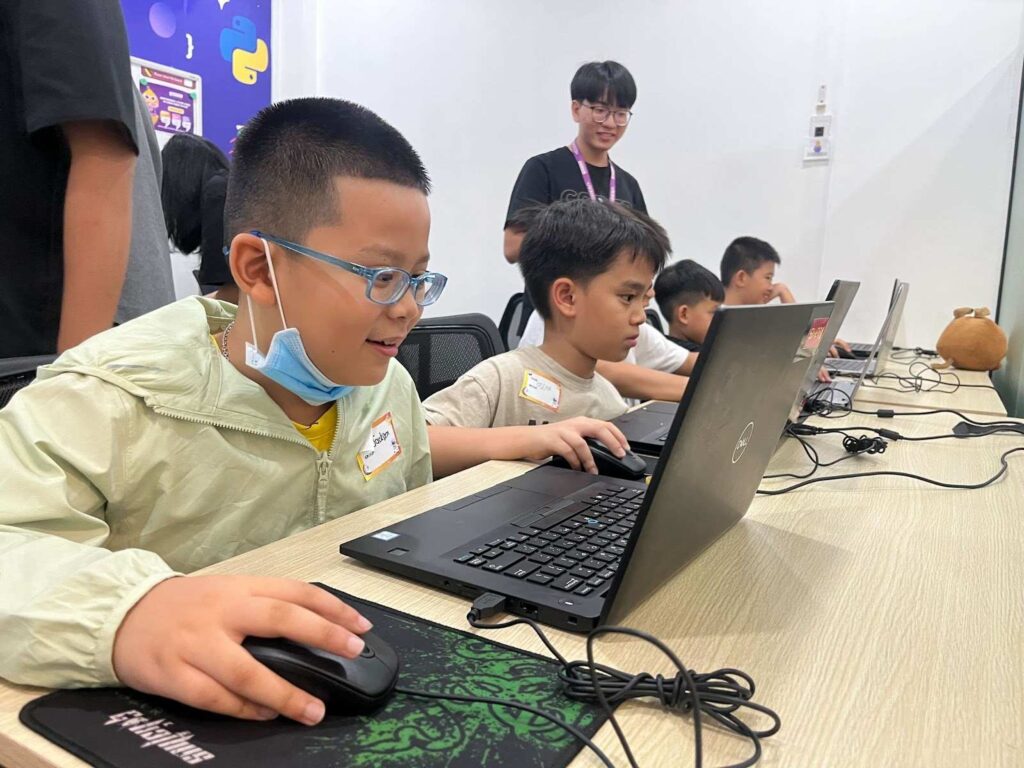
According to a survey conducted by Switch with over 1000 gamers regarding their social connections, it was found that gamers tend to build relationships more easily with family members and friends compared to non-gamers. Additionally, gamers exhibit a fairer and more egalitarian mindset. They are particularly adept at establishing full-time bonds with certain occupations. This research contradicts the common belief that "games make people lazy, introverted, and socially isolated."
Moreover, with online games that involve multiple players, children can connect and communicate with friends or other players from around the world. This helps children develop social skills, learn teamwork, communicate effectively, and build better relationships. Through these games, children can also learn from others and explore different cultures, perspectives, and interests.
Playing games not only brings joy and entertainment to children but also helps develop important soft skills such as problem-solving through complex situations, effective time management, teamwork, and interaction. It stimulates thinking and enhances concentration abilities. Additionally, the natural production of serotonin hormone during gameplay can help children suppress feelings of anxiety and stress.
Roblox is one of the "storms" in children's lives today. As an online gaming platform, Roblox allows children not only to play games but also to design and build their own games by creating characters, objects, storylines, and rules for their games. However, many children only participate in games created by other users and play with their friends, as they have not fully understood the special possibilities that this platform offers.
If utilized correctly, Roblox can bring many exciting skills to children:

Developing creativity skills: Roblox provides an environment for children to develop their creativity and design skills by allowing them to build and create games, virtual worlds, and custom versions.
Exploring STEM fields: Roblox games can stimulate children's interest in fields such as science, technology, engineering, and mathematics (STEM). Children can learn and apply STEM knowledge through creating and interacting with tools and media in Roblox.
Learning through gaming: Roblox can serve as a valuable educational tool for children. The games within Roblox can focus on aspects such as financial management, problem-solving, logical thinking, and exploration.
Developing soft skills: Children can interact and play together in Roblox, which helps them develop soft skills such as teamwork, communication, and collaboration. Additionally, Roblox provides opportunities for children to communicate with players from around the world.
Exploring artistic creativity: Roblox provides a platform for children to explore and develop artistic creativity by creating and designing environments, characters, and landscapes within the game.
Guiding, accompanying, and sharing with your child are effective methods to help them utilize and develop their technology skills without being addicted. However, guiding your child on the right path is not simple. To make the most of the advantages of online games, Roblox, and technology, parents need to understand the technology and identify its core values.
Playing games is not inherently bad, and the same goes for Roblox! Instead of blaming and resorting to harsh measures with our children, we should examine the underlying reasons and seek to understand them. This may involve considering the parenting approach, relationship dynamics, and influences from peers.
Physical punishment or strict prohibition is not an effective solution for children who enjoy playing games and using electronic devices. As mentioned, electronic games are not inherently bad. They only become problematic when they are misused and not utilized or regulated properly. Therefore, we should avoid having a biased perspective and approach this issue from multiple angles.
Technology is an endless source of knowledge that children can explore and learn from. It is also a way to create opportunities for children to access and interact with technology, allowing them to discover and develop their creativity and logical thinking abilities. Parents can explore technology together with their children, discovering the positive aspects, practical applications, advantages, and disadvantages, helping children understand how to use technology and avoid its harmful effects. When children receive the understanding and support of their parents, they will feel more confident, comfortable, and receptive.

Game Development is an innovative solution to harness technology and the act of playing games. With the Game Development course at Algorithmics, children can learn how to design games and creatively and effectively utilize technology.
The Game Development course is designed for children aged 10 and above, aiming to explore and develop their creativity and logical thinking through game design. With the Game Development program, children embark on an exciting adventure into the world of game development. Through the experiences and knowledge gained in Game Development, children can continue their learning journey by delving into the professional programming language, Python
During the course, students will master the tools for developing games in Roblox Studio and the fundamentals of the Lua scripting language. Students themselves choose which game and characters to create.
Algorithmics delivers confidence and programming skills:
32 Lessons / 8 Months / Course
90 Minutes / Lesson / Week
Class Size: <12 students
Let's explore and experience game design so that your child can achieve a breakthrough in their learning and development journey. Game development not only helps children design games, learn, and be creative, but also opens up bright future opportunities in the field of technology.
In addition, parents can also register to participate in free assessments of their child's capabilities and technological skills. From there, you can understand whether your child is suitable for this profession or not HERE.
Blended learning, also known as the hybrid learning approach. This is a modern learning method that combines traditional learning with online learning. It leverages the flexibility of technology and diversifies teaching methods to create a multidimensional and rich learning environment. In programming courses, Algorithmics has successfully applied the blended learning approach to provide the best learning experience for students. Let's explore blended learning and the effectiveness of this method!
Blended learning is the intelligent combination of in-person and online learning methods. This approach provides students with diverse and flexible learning experiences. Students can access knowledge through various sources, including online learning materials, video lectures, and online forums. They even have the opportunity to participate in live classes with teachers, engage in discussions, and collaborate in group work. The integration of these two learning modalities creates a multidimensional learning environment that enhances interaction and exploration. As a result, students can develop comprehensive skills and knowledge.
Blended learning, also known as hybrid learning, is a diverse approach to education that combines in-person and online learning methods. It offers students a variety of learning experiences and flexibility in accessing knowledge from multiple sources. Students can engage with online learning materials, video lectures, and participate in online forums and even online courses.
At the same time, students have the opportunity to participate in face-to-face classes with teachers, engage in discussions, and collaborate in group work. The combination of these two learning modalities creates a multidimensional learning environment that enhances interaction and exploration. Blended learning allows students to develop comprehensive skills and knowledge.
There are several models of blended learning commonly used in education and training:
This model allows students to alternate between in-person and online learning. It is often used in primary and secondary education. For example, students can switch between online and in-person learning environments, benefiting from the advantages of each.
The Flex model provides students with flexibility in choosing their learning methods. Teachers provide online guidance and instruction, and students manage their own time and space for online learning. Face-to-face classes are then reserved for discussions, exchanges, and resolving queries. The Flex model encourages students to develop self-directed learning skills and time management. It is commonly used in higher education settings.
In this model, students have the freedom to select online courses to supplement their traditional learning. Based on their interests and goals, students choose online courses alongside their regular studies. The Self-Blend model allows students to expand their knowledge and explore new areas flexibly. In simpler terms, it involves participating in an additional online course.
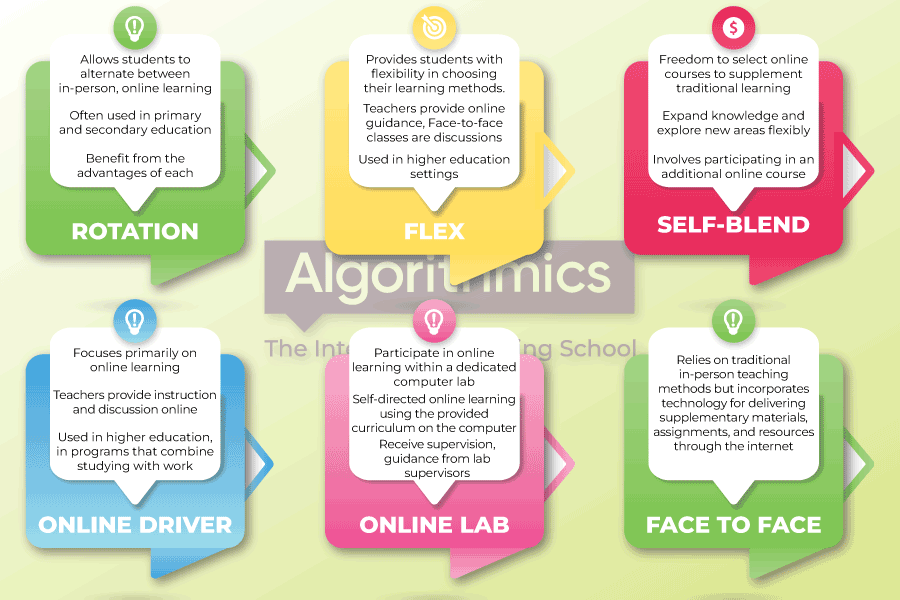
This model focuses primarily on online learning. Students rely on online tutorials, exercises, and lectures. If they have any questions or need support, teachers provide instruction and engage in discussions online. The Online Driver model offers high flexibility, allowing students to adjust their learning pace according to their individual needs. It is commonly used in higher education and in programs that combine studying with work.
This is a relatively new model where students participate in online learning within a dedicated computer lab. Students engage in self-directed online learning using the provided curriculum on the computer. However, they still receive supervision and guidance from lab supervisors.
This model primarily relies on traditional in-person teaching methods but incorporates technology for delivering supplementary materials, assignments, and resources through the internet.
Each of these blended learning models offers unique experiences and benefits, catering to different educational contexts and needs.
In general, Blended learning, as a combination of in-person and online learning, brings significant benefits to students. Firstly, the flexibility of this method allows students to take control of their time and learning space. They can adjust the learning pace according to their abilities and personal schedules. Moreover, the use of technology in the learning process enhances interaction between students and learning content. Students can access study materials anytime, complete online exercises, and receive immediate feedback from teachers.
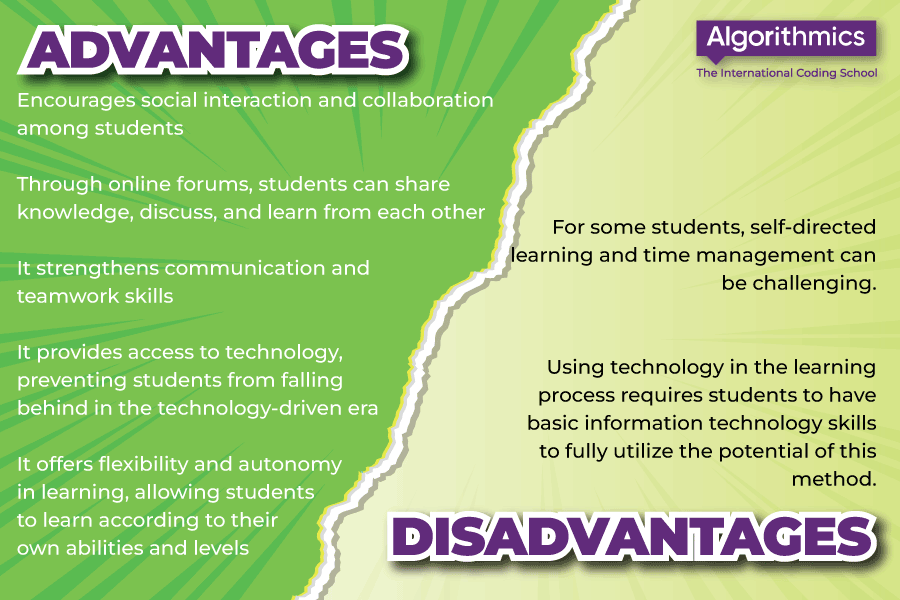
To effectively apply the blended learning method, it is crucial to choose and use appropriate technology. You need to research and apply online learning tools and platforms that align with your learning goals.
Additionally, it is important to clarify the roles of both teachers and students in the learning process. Teachers must ensure that students receive the necessary support and guidance to effectively access online learning content. Students also need to have self-awareness and time management skills to avoid falling behind in their studies.
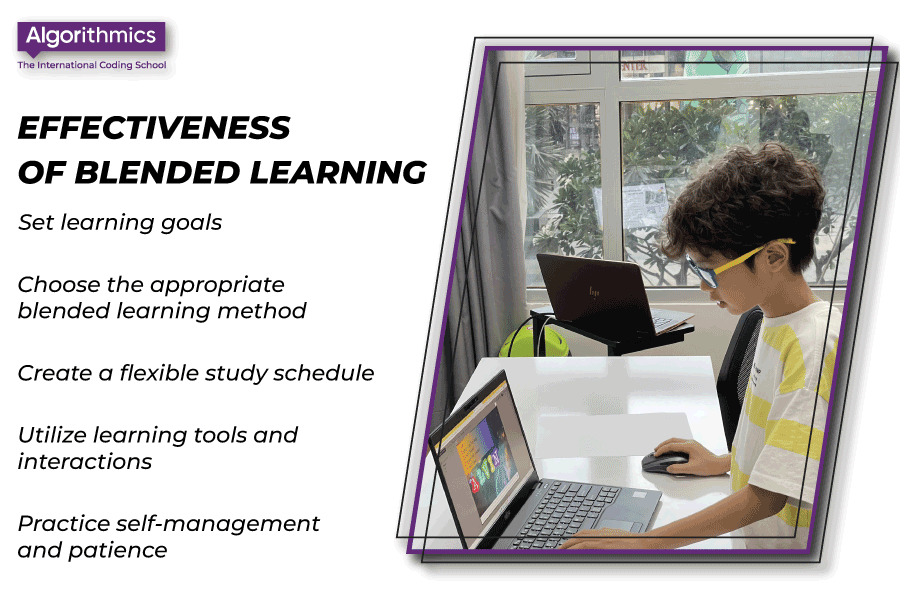
To apply the blended learning method effectively, consider the following factors:
Start by clearly defining your learning goals. Understand what you want to achieve and identify the necessary skills and knowledge. This will help you select and leverage suitable learning materials and resources.
Determine the suitable blended learning method for your needs. You may want to combine online learning with in-person classes or engage in self-paced online learning combined with discussions and interactions with teachers and classmates. Choosing the right method will allow you to leverage the advantages of each approach and optimize the learning process.
Blended learning allows you to manage your study time independently. Create a flexible study schedule that allows you to adjust and organize your time according to your needs. Ensure you allocate enough time for both online and in-person learning and choose the appropriate timing for each method.
If you use an online learning platform, take advantage of the learning tools and interactive features it provides. Engage in discussion forums, exchange opinions with teachers and classmates, and complete online exercises and projects. If you are learning in-person, make use of group activities, discussions, and direct interactions with teachers and classmates.
Blended learning requires self-management and patience. Set your own goals, plan your activities, and consistently engage in learning activities. Additionally, be patient and don't get discouraged by difficulties and challenges in the learning process.
By considering these suggestions and adapting them to your specific learning context, you can effectively apply the blended learning method and enhance your learning outcomes.
Blended learning is applied specifically in the programming learning process at Algorithmics. Students not only have face-to-face learning with teachers but also have the opportunity to access the Algorithmics online platform 24/7 for self-study and practice. Students can access rich learning materials, complete exercises, participate in activities and projects, and receive feedback from teachers through this platform. The blended learning environment at Algorithmics creates a perfect combination of teacher support and student autonomy.
Personalizing a child's learning trajectory allows them to adjust the learning pace and actively acquire knowledge through the platform's available resources. It increases proactivity and flexibility in learning as students can access the platform anytime, anywhere.
Blended learning shortens the "distance" between teachers, students, and peers as students can simply send messages, leave questions about exercises, and teachers will quickly provide guidance and answer inquiries.
It serves as a key to access a vast repository of technology projects created by young programmers worldwide on Algo's exclusive learning platform. This becomes a reference and inspiration for students to confidently "code" their own world.
The exclusive 24/7 learning platform of Algorithmics is a special online space that provides students with flexibility and convenience in the learning process. With this platform, students can access it anytime, anywhere to study, practice, and work on projects.
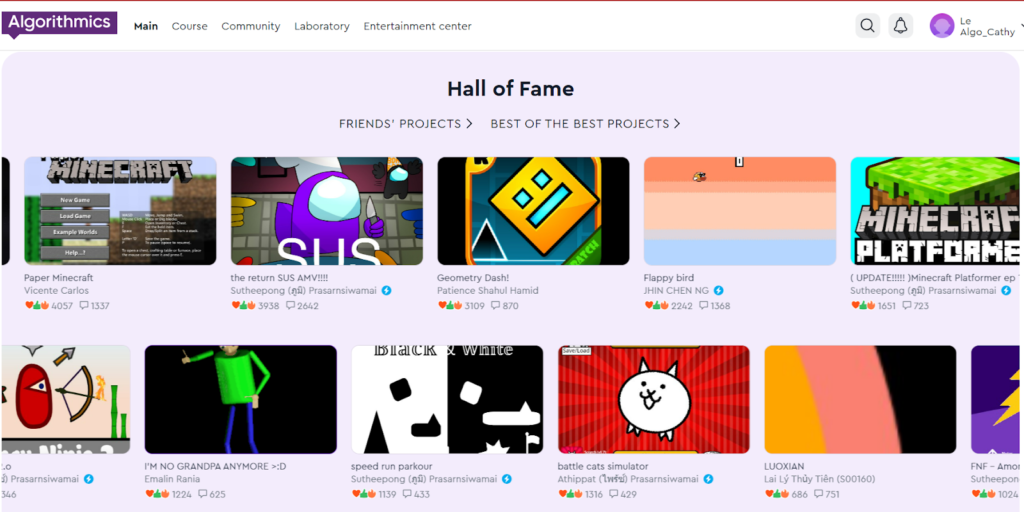
The 24/7 learning platform is not only a rich source of knowledge but also a connected environment that allows students to interact and collaborate with international peers from over 70 different countries. This is an opportunity for children to explore and learn from diverse perspectives and cultures, opening up diverse and enriching learning experiences.
On this platform, students can access a wide range of courses, lectures, study materials, and diverse and updated exercises. They can adjust their learning pace and choose courses that align with their interests and personal goals. Additionally, students can participate in activities, projects, and competitions, exploring the world of programming through practical and exciting experiences.
Blended learning is a diverse and flexible learning method that combines online and in-person learning. It brings many benefits to students, from flexibility in time and space, enhanced interaction and exploration, to autonomy and collaboration. Particularly in the field of programming, Algorithmics has successfully implemented blended learning to create the best learning environment for students. Blended learning helps students comprehensively access programming knowledge, develop skills and logical thinking, and explore the potential of technology. Explore and experience this unique combination to achieve success in programming learning.
Furthermore, parents can also register for a free assessment session for their children's abilities, technology skills, and logical thinking. This can help determine if their child is suitable for this profession at HERE