


If the 4.0 era is known as the age of technology and artificial intelligence, then the 5.0 industrial revolution will be the integration and interaction between humans and technology, artificial intelligence. Therefore, technology skills, programming knowledge are gradually asserting their positions in this era.
The 5.0 era originates from Japan's Society 5.0, with the goal of building an intelligent, comprehensive, and sustainable society. The boundary between virtual space and physical space is gradually blurring in this era.
Inherited and developed from the Industrial Revolution 1.0 to 4.0, the 5.0 era marks a new turning point in the industrial field. Technology and artificial intelligence play a central role in the process of production and business. Humans hold the management position, balancing machine computation and creative thinking.
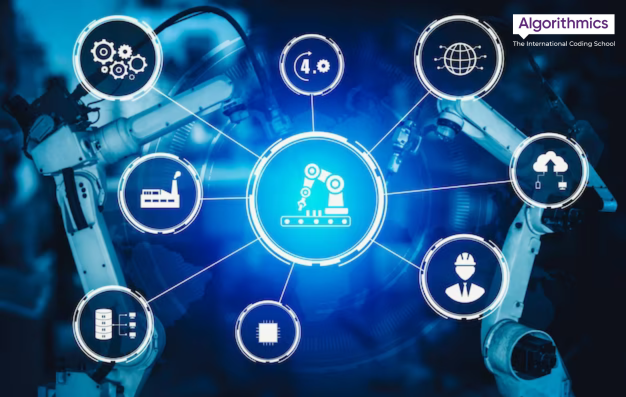
The key characteristics of 5.0 include:
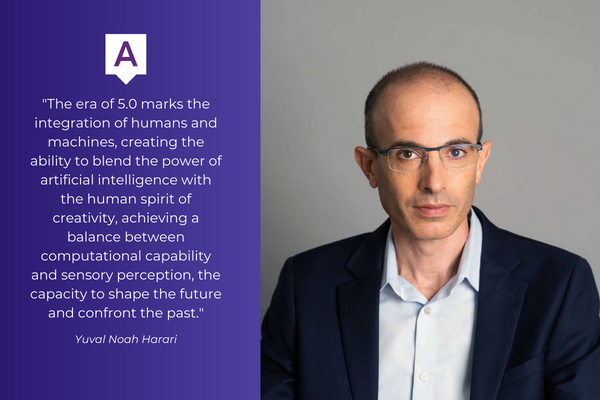
In the words of Harari, "The 5.0 era marks the fusion of humans with machines, combining the power of artificial intelligence with the creative spirit of humans. It creates a balance between computational ability and sensory perception. The ability to shape the future and the ability to confront the past."
The main difference between the 4.0 and 5.0 eras lies in the advancement of the relationship between humans and technology. Here are some key differences between these two eras:
In the 4.0 era, technology, especially artificial intelligence and automation, was often used to enhance productivity and efficiency in manufacturing and management.
In contrast, the 5.0 era focuses on creating a stronger collaborative environment between humans and machines. Technology supports humans, and vice versa, creating a unique blend of artificial intelligence and human creativity.

In the 5.0 era, technology not only produces high-quality products and services but also enables personalization and improved customer experiences. Combining technology with human creativity helps provide products and services that cater to diverse human needs.
In the 4.0 era, technology was often used to replace human labor in many production and service tasks.
In the 5.0 era, the focus is on humans and technology working together. Humans provide creativity, critical thinking, and problem-solving, while technology assists with complex computations and data processing.
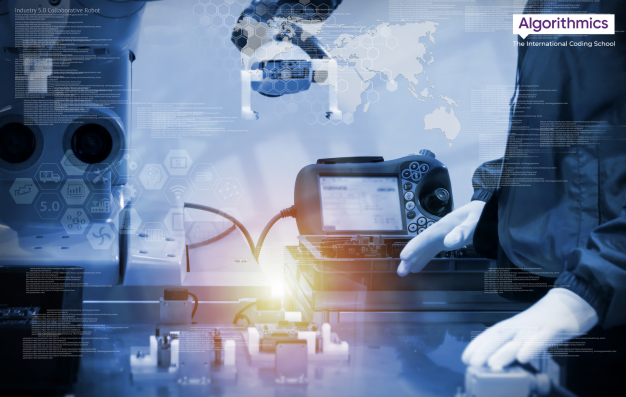
In the 5.0 era, strong collaboration between humans and technology is crucial. In this model, skills, critical thinking, and creativity of humans become essential. When humans and technology collaborate closely, the ability to think creatively and adapt to change becomes vital for success in this environment.
Here are some essential factors for thriving in the 5.0 era:
In an era where technology and artificial intelligence continuously evolve, creative thinking and logical reasoning are key. Creative skills help generate new ideas and create breakthrough products and services, while logical thinking allows individuals to stay ahead and adapt to technological developments.

Machines lack the ability for extensive critical and reflective thinking. Only humans can excel in this regard. Critical thinking is crucial for societal development through research, inquiry, and understanding, contributing to better decision-making and societal growth.
Regardless of the era, teamwork and communication skills are highly valued. They not only prevent conflicts but also enhance collaboration among individuals, teams, and even nations.
In the 5.0 era, technology is not just a tool; it becomes a partner to humans. Technology, including artificial intelligence and automation, can perform many computational and repetitive tasks. Therefore, understanding how to use technology, optimizing tools, and applying them to work, life, and learning are essential. Without these skills, one may easily fall behind and struggle to grasp trends.
In summary, the 5.0 era emphasizes the synergy between humans and technology, where technology augments human capabilities rather than replaces them. Success in this era hinges on creativity, critical thinking, adaptability, teamwork, communication, and technological proficiency.
Programming skills are crucial and indispensable in the 5.0 era. They are not only essential for understanding and harnessing technology but also for participating in the digital revolution and meeting the needs of the industrial and societal world.
The 5.0 era witnesses a powerful integration of technology into nearly all aspects of life and industry. From automated manufacturing to artificial intelligence, technology is changing how we work and interact. Programming skills enable individuals to understand and engage in this transformation.
Programming isn't merely a dry and rigid subject, as often perceived. It promotes logical thinking through coding, encourages creativity in ideation and project execution, such as app and software development, and enhances problem-solving abilities. It enables individuals to think creatively and find optimal solutions to errors and challenges.
The field of information technology and software development is in high demand. It offers numerous job opportunities and the potential for high salaries. Programming skills open doors to various career choices within the IT industry. Moreover, programming contributes significantly to non-related fields. It enables individuals to efficiently utilize AI applications, digital technologies, and software in their work, ultimately improving productivity and quality.

As technology advances, security becomes increasingly vital. With programming knowledge, individuals gain a deeper understanding of how technology operates and the importance of personal data security. This knowledge empowers them to protect themselves from online risks and use technology more safely.
Around the world, coding has been incorporated into mainstream education:
In Japan, programming became a mandatory subject in elementary schools starting in April 2020.
The United Kingdom introduced programming into the primary school curriculum in 2014.
The United States began teaching programming to children in 2016.
South Korea, Australia, China, Singapore, and many other countries have also integrated programming into their modernized curricula since 2017.
However, in Vietnam, "coding for children" is still a relatively new and less recognized subject. Many parents are unaware of its importance, potentially putting Vietnamese students at a disadvantage compared to their international peers.
Don't let your child fall behind or struggle in the international environment simply because they don't know how to code. Consider enrolling them in programming courses at Algorithmics Vietnam.
Algorithmics is not just a coding school for children; it's an environment that promotes comprehensive development. At Algorithmics, we are committed to helping students not only master coding skills and create applications but also develop highly applicable tech skills and crucial soft skills. We aim to prepare children for the challenges of the 5.0 era.

Algorithmics places a strong emphasis on developing logical thinking, problem-solving skills, creativity, and teamwork. We believe that combining programming knowledge with these skills is the key to our students becoming experts not only in the field of technology but also in various other fields. Algorithmics views this as an investment in our students' futures, enabling them to confidently face challenges and make meaningful contributions to modern society.
As September arrives, let's celebrate Algorithmics turning 4 years old and achieving remarkable milestones. Join us in this celebration with incredible offers and vouchers for parents and children. With a mission to spread the "love for coding" to every child in Vietnam, we aim to connect Vietnamese children with peers from around the world. September promises to bring valuable gifts for children!
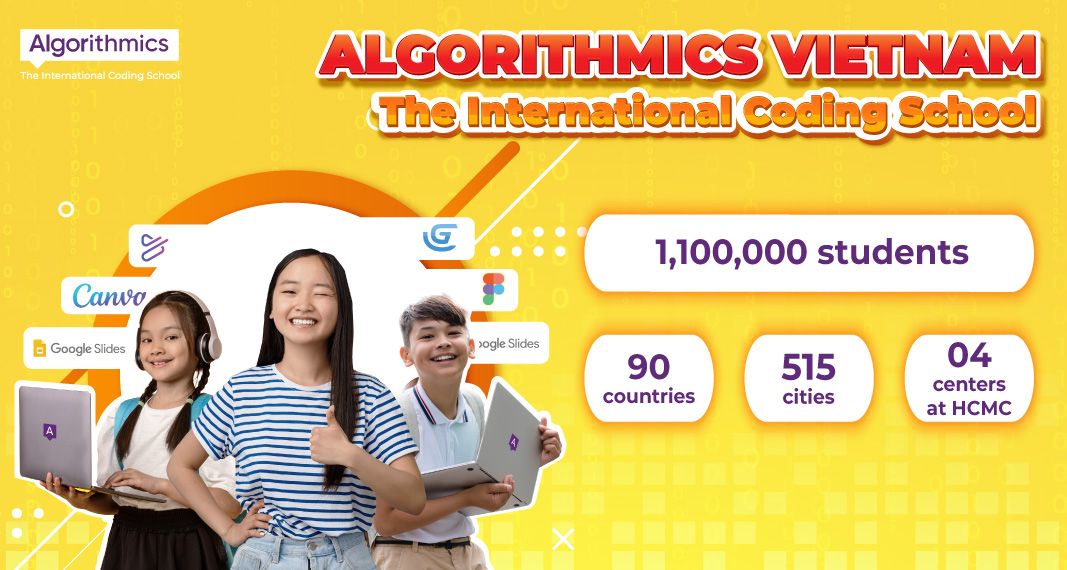
Algorithmics is thrilled to celebrate a significant milestone - 1,100,000 students worldwide! With a presence in 90 countries and 515 cities, we take pride in expanding the student community globally.
In honor of our 4th birthday at Algorithmics Vietnam, we have arranged a memorable month with exciting offers for our students. Don't miss the opportunity to embark on an exciting educational journey and embrace promising new knowledge at Algorithmics!

Simply enroll in any course, and parents will have the chance to receive valuable vouchers ranging from 500,000 VND to 3 million VND. The total voucher value is up to 300 million VND! Additionally, hundreds of Coder Kits (including high-quality pencils, notebooks, and backpacks) are waiting for Algoers. All vouchers at Algorithmics have 100% value. Be one of the members to enjoy these hot offers from Algorithmics!

Details:
With the desire to provide opportunities for all young learners to access programming, Algorithmics offers an immediate 5% scholarship to any student who registers for any course at Algo, with the condition of participating in a course that has already started.
Even though they join a class that has already started, Algoers will also participate in catch-up classes with teachers to ensure a good understanding of the lessons and keep up with the course content.

Details:
Not only will you be able to test your technology skills and thinking with a 100% free specialized teacher, but parents also have the chance to participate in a lucky spin with a 100% chance to win! Prizes include vouchers of 2%, 3%, Coder kits, backpacks, notebooks, and coder socks.

Details:
Register today to not miss out on the fantastic opportunities at Algorithmics! Happy 4th Birthday Algorithmics - Explore your child's talents and unlock an unlimited future.

Amidst the ever-evolving landscape of technology and society, education in the 5.0 era promises significant changes. It not only focuses on knowledge but also emphasizes students' social abilities, spirit, and safety. From integrating artificial intelligence to creating a learning environment that isn't solely technology-driven. Education in the 5.0 era aims to build a comprehensive education system and considers the interaction between humans and technology.
Education in the 4.0 era, a term often used to denote the educational revolution. Aims to adapt and respond to the challenges and opportunities brought about by the Industry 4.0 revolution. This is a period characterized by the prevalence of digital technologies, artificial intelligence, machine learning, the Internet of Things (IoT), blockchain. These changes lead to a comprehensive transformation in how we learn and teach.
Education in the 4.0 era doesn't only focus on transmitting knowledge but also aims to develop crucial skills for the future. These skills range from technology proficiency to creative thinking and problem-solving.
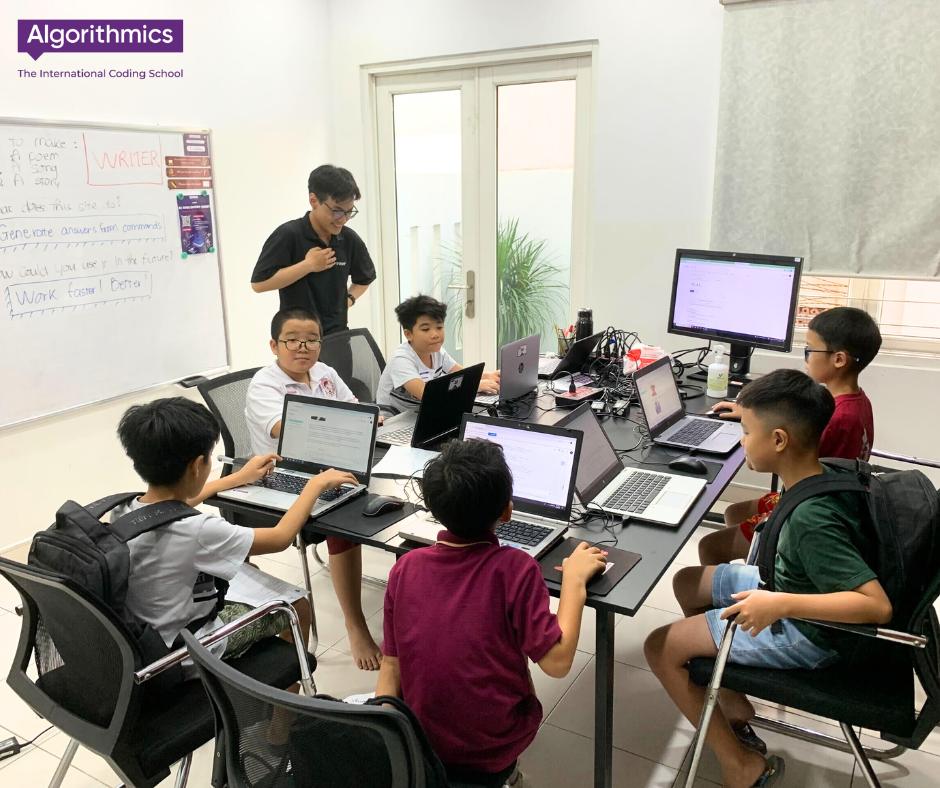
Education in the 5.0 era is centered around human beings. Unlike other education systems, the emphasis is not solely on "results." Instead, the learning experience and the ability to absorb knowledge take precedence. Additionally, intellectual, spiritual, social, health, and personal development aspects are also highlighted.
As a result, teaching methods are altered to stimulate self-development, encourage creativity, and foster a thirst for learning. Furthermore, supplementary factors such as facilities, machinery, and digital technology are advantageous to the 5.0 education system, as education is influenced by technology.

In Education 4.0, technology plays a crucial role in enhancing the speed, accuracy, and knowledge in the teaching and learning process. The main goal is to integrate Industry 4.0 technologies into the learning environment and educational institutions. This includes the use of technologies like the Internet of Things (IoT), artificial intelligence (AI), machine learning, and gamification.
However, Education 5.0 represents a progression from this mindset. It doesn't reject the concepts introduced in Education 4.0, but it places a greater emphasis on the human aspect of learning. Education 5.0 goes beyond emphasizing knowledge and focuses more on social and emotional capabilities. The objective is to create a learning environment that relies less on technology and enhances the well-being and safety of students.

The future of Education 5.0 is predicted to be diverse and innovative, focusing on optimizing students' learning experiences and addressing challenges and opportunities in the digital world. Here are some anticipated trends in the future of Education 5.0:
Education 5.0 promises significant changes and evolution for the future. With a focus on holistic student development, Education 5.0 goes beyond mere knowledge acquisition to emphasize social skills, mental well-being, physical health, and personal growth. Future trends in Education 5.0, such as learning through artificial intelligence, virtual reality, and augmented reality, nano learning, personalized education, the cultivation of critical thinking and soft skills, along with deeper student-teacher interactions, all align with this goal.
The future of Education 5.0 holds the promise of a diverse, flexible, and personalized learning environment where students can foster creative thinking, soft skills, and problem-solving abilities. The unique integration of human elements and technology within Education 5.0 will create new opportunities and drive the development of the younger generation, preparing them to engage with a diverse and ever-changing world.
More than just a coding school, Algorithmics provides a comprehensive development direction for students by creating opportunities for children to develop both technological skills and essential soft skills needed in the 5.0 era. Here, we not only teach programming but also help them develop logical thinking, creativity, teamwork, communication, and many other important soft skills for the 5.0 era.
The Fourth Industrial Revolution (4.0) and the Fifth Industrial Revolution (5.0) are two stages of technological development. They inherit and build upon each other. The Fourth Industrial Revolution (4.0) focuses on automation and the connection of machines and devices. In contrast, the Fifth Industrial Revolution (5.0) focuses on the integration of Artificial Intelligence (A.I.), other technologies, and humans to create new, higher-value products and services.
In the Fourth Industrial Revolution (4.0), automation and enhanced productivity take center stage. Machines and devices work predominantly on their own. However, in the Fifth Industrial Revolution (5.0), the focus shifts towards interaction between humans and devices, from machines to intelligent robots. This is a stage where humans are not just controllers and supervisors but engage closely with technological tools.
The 5.0 era particularly values human creativity and innovation. While the Fourth Industrial Revolution (4.0) concentrates on optimizing processes, the Fifth Industrial Revolution (5.0) encourages humans to actively participate in creating new solutions. Leveraging intelligence to generate value and solve complex problems is crucial.
Instead of replacing humans with machines, the 5.0 era establishes a collaborative environment where humans and robots can work together and complement each other. Humans remain the managers with the ability to make proactive decisions in production and management processes.
The 5.0 era places great importance on developing human skills and learning capabilities. In this environment, technology not only ensures performance and optimization but also provides favorable conditions for continuous learning and the acquisition of new skills.
The goal of the 5.0 era extends beyond just boosting productivity. It's about constructing a smarter and more sustainable society. The 5.0 era prioritizes community benefits and environmental concerns, encouraging sustainable development and creativity across all aspects.

In summary, the key differences between the Fourth Industrial Revolution (4.0) and the Fifth Industrial Revolution (5.0) lie in the focus on human-technology interaction, human creativity and innovation, the synergy between humans and machines, training and development opportunities, and the objective of building a smarter and more sustainable society.
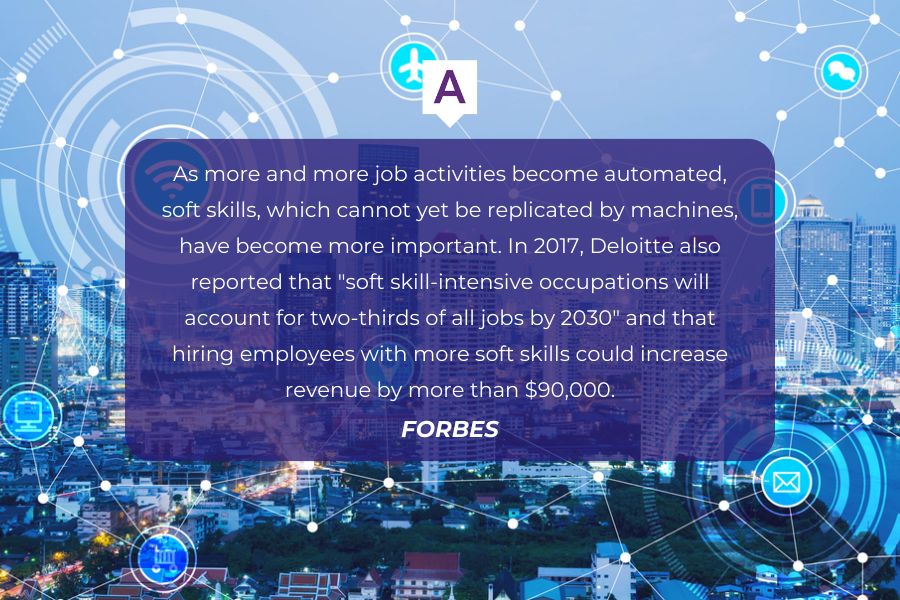
According to Forbes, in a Deloitte report, it is stated that two-thirds of all jobs by 2030 will be related to soft skills.
The 5.0 era demands flexibility, creativity, and adaptability to changes in both the economy and society. As a result, soft skills have become more important than ever. Technology is evolving rapidly, and businesses need employees who can adapt to changes and learn new skills. Soft skills help employees work more efficiently and solve problems better.
The 5.0 era highly values human creativity and diversified skills. Focus on developing skills including communication, time management, logical thinking, critical thinking, and teamwork.
Keep track of and learn about new technologies and trends in the 5.0 era such as Artificial Intelligence (A.I.), Machine Learning, Internet of Things (IoT), Blockchain, and various other technologies. Understanding these will help you apply them in different aspects of life and work.
The 5.0 era brings new job opportunities while demanding adaptability to changes in the work environment. Maintain an open mindset to expand your knowledge and be ready to learn in order to engage in new industries.
Understanding how technology operates and its technical aspects helps us work more effectively in high-tech environments. This is particularly important when working alongside smart devices, robots, or automated systems.

Creative thinking is crucial for finding solutions to complex problems. Focus on developing creative thinking, seeking new approaches, and continuously asking questions to explore new possibilities.
Establish and maintain a network among people within the technological community. This can bring opportunities for learning, information exchange, and support for advancement in the 5.0 era.
Life and work in the 5.0 era will be continuously changing. Have an open and adaptive mindset, while seeking ways to leverage the new opportunities that this era brings.
Algorithmics is not merely a coding school for children. It is an environment that fosters comprehensive development. Here, students not only learn coding and app creation, but also acquire highly applicable technology skills and essential soft skills, laying the foundation for their growth in the 5.0 era.
Algorithmics focuses on developing logical thinking, problem-solving skills, creativity, teamwork, helping students become proficient not only in technology but also in various other fields. Algorithmics believes that combining programming knowledge with these important skills will empower our students to confidently face challenges and make meaningful contributions to modern society.
Algorithmics' curriculum is designed by top educational and psychological experts, incorporating the most advanced teaching methods to ensure high learning efficiency for students.
This approach combines in-person and online learning, allowing students to fully utilize both learning environments. Students can access course materials online before classes, thus enabling in-person sessions to focus on discussions, real-world problem-solving, and teamwork. Additionally, Algorithmics' exclusive learning platform is a space where children can learn, interact with international friends, and engage in projects. With its user-friendly interface, this platform enhances children's interest and enthusiasm for learning.
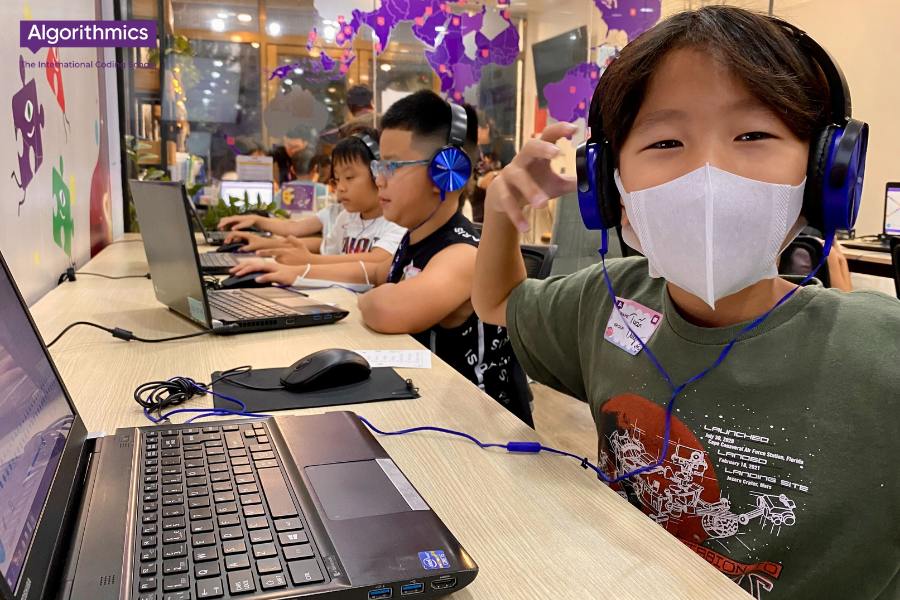
Algorithmics promote learning through practical projects. Students not only learn theories but also apply their knowledge to solve real-world issues and create functional applications. This approach helps students develop creative skills, logical thinking, and the ability to work independently.
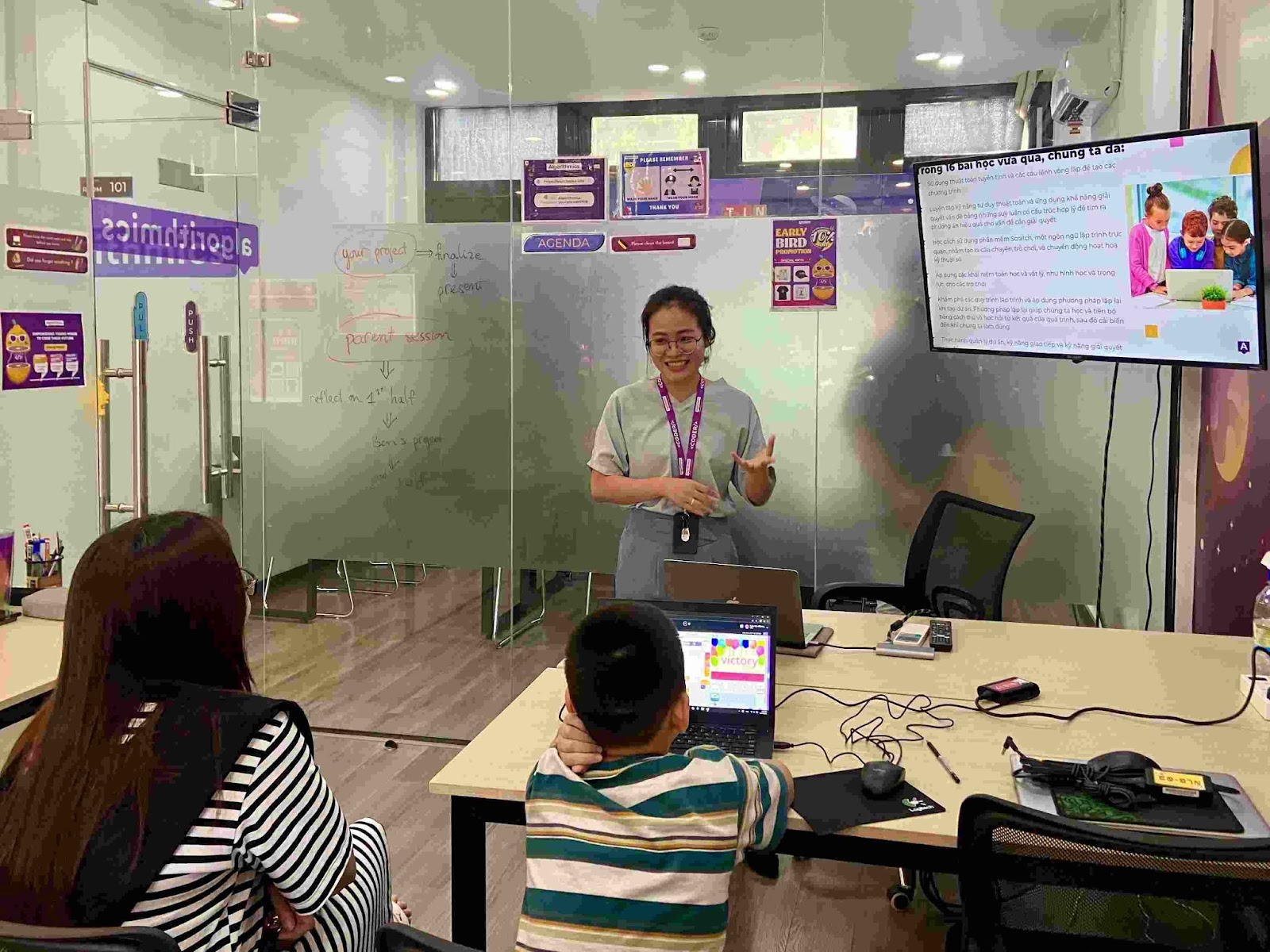
Algorithmics encourage teamwork through group activities and projects. Students collaborate, share ideas, and support each other during their learning journey. This not only enhances effective learning but also cultivates teamwork and communication skills.
By combining these methods, we create a diverse, flexible, and engaging learning environment that enables students to develop comprehensive knowledge and skills.
At Algorithmics, our focus goes beyond teaching programming skills; we emphasize the development of soft skills for our students. Here are some soft skills that our students have the opportunity to learn and develop:

All these soft skills not only contribute to students' success in programming but also have a positive impact on their personal development and future careers.
The 5.0 era marks a new phase of the Industrial Revolution. In this era, technology is reshaping how we live and work, profoundly impacting the labor market 5.0. New jobs are emerging while old ones are disappearing.
In this article, we will explore the changes that the job market will face in the 5.0 era, as well as the skills and knowledge that workers will need to succeed in the future.
The 5.0 era is a concept proposed by the Japanese government in 2016, describing a future society where humans and machines collaborate to solve issues and enhance quality of life. It builds upon the foundation of the 4.0 Industrial Revolution but places greater emphasis on human-machine cooperation, aiming to create a more sustainable and happier society.

The 5.0 era holds immense potential, but it also presents challenges. To succeed, preparation and wise investments are necessary. We need to develop new technologies while changing our mindset and work approaches to adapt to this new era. By doing so, the 5.0 era can become a brighter time for everyone.
The 5.0 era will deeply impact our lives, including:
The labor market in the 5.0 era will undergo substantial changes. Not only will some professions be completely replaced by machines, but new ones will also emerge. As technology reshapes how we work, workers will need to acquire new skills to meet market demands.
The labor market 5.0 will prioritize placing humans at the center. Unlike the 4.0 era, 5.0 will shift focus from "what humans can do with technology" to "what technology can do for humans." Additionally, it will prioritize challenges that have a societal and human impact.
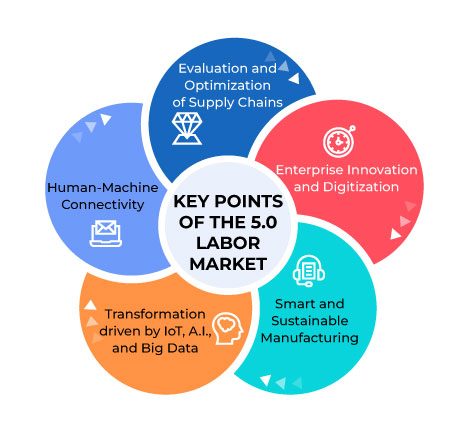
The five key focal points of labor market 5.0 include:
According to the World Economic Forum's report on the 5.0 labor market, around 23% of jobs will face disruption. Over the next five years, there will be at least 14 million fewer jobs. An estimated 83 million roles will vanish, while only 69 million new jobs will emerge.
The largest losses are anticipated in administrative roles, security, traditional factory and commerce positions. Some characteristics of roles expected to disappear in the 5.0 era include:

Several new professions will emerge in the 5.0 era with the following characteristics:

In the stages of the 3.0 and 4.0 industrial revolutions, robots and artificial intelligence emerged to replace certain human positions in factories to enhance productivity. This has revealed that not only in the present day but also in the distant past, humans and machines have been competing in various job roles.
However, in reality, while robots are more stable and perform tasks with higher accuracy than humans, they cannot surpass human flexibility, adaptability, and critical thinking. According to a recent report from Harvard Business Review, about 20% to 80% of jobs could potentially be automated, but there is no job that can be fully automated. This implies that even with potential future developments, robots will not entirely replace humans.
Therefore, in the 5.0 era, humans will be responsible for jobs that involve value addition, creative thinking, skills, and innovation. They will also manage robot systems in production lines. Robots will assist humans in the overall digital transformation.

The goal of Industry 4.0 is to connect machines, processes, and systems to maximize factory performance. In contrast, Industry 5.0 will focus on developing a production mindset where each factory not only maximizes productivity but also achieves high efficiency. To achieve this, there needs to be interaction between humans and machines.
In the near future, workers in factories will need to provide high value addition to products. This also requires them to possess specialized knowledge, skills, and creativity. Tasks that are mundane, repetitive, or hazardous will no longer be exclusive to humans. Robots and Cobots will perform these tasks better.
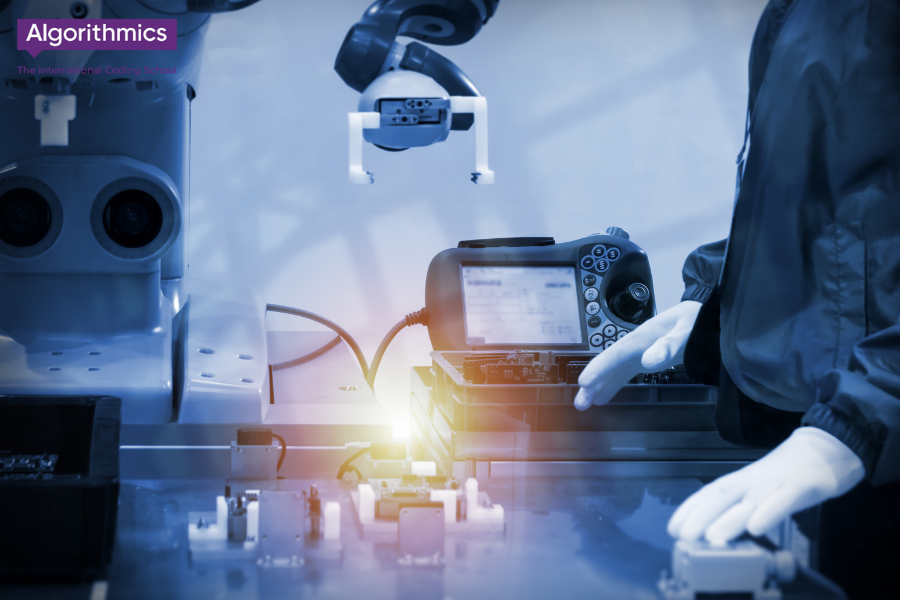
Clearly, humans and various types of machines will be connected to meet the increasing complexity in production and adaptability through continuously optimized manufacturing processes.
To succeed in the 5.0 era, workers need to equip themselves with new skills and knowledge. Skills and critical thinking are essential across various industries in the 5.0 era. They not only help you meet the changing demands of the job market but also are things that machines cannot replace.
In a world that is constantly changing, the concepts of eras and development are also ever-evolving. Industry 4.0 marked a significant breakthrough in technology and digital connectivity. And now, we are stepping into a new era: 5.0. Let's delve deeper about what is 5.0.
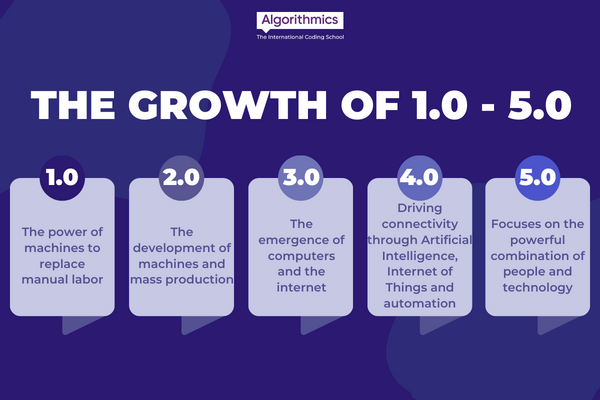
The eras from 1.0 to 5.0 represent progress and change in the developmental process of society through different stages.
What is 5.0 era? The Impact of 5.0
From 1.0 to 5.0, we have the opportunity to witness the world changing incessantly and being prepared to face the fresh challenges and opportunities that this development brings about.
The concept of Industry 5.0 originates from Japan's Society 5.0. It signifies the goal of constructing a smarter society, a comprehensive and sustainable societal system. This era witnesses the fading boundaries between virtual and physical spaces.
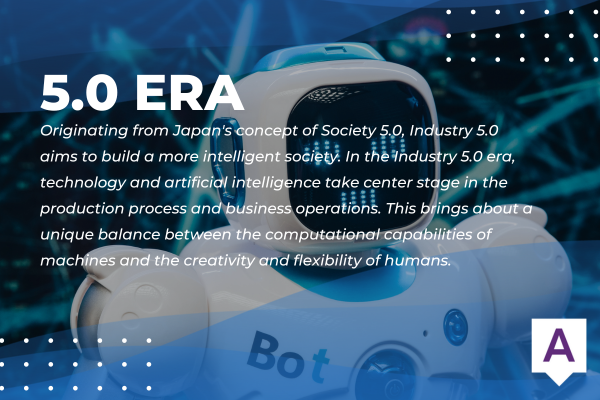
The 5.0 Revolution follows and evolves from the Industrial Revolutions 1.0 through 4.0, marking a new commitment in the industrial domain. In Industry 5.0, technology and artificial intelligence stand at the core of production processes and business operations. This brings about a unique balance between machine computational capabilities and human creativity and flexibility.
What is 5.0 era? The Impact of 5.0
The key features of Industry 5.0 encompass the delicate integration of humans and machines, production flexibility, and product diversification. Industry 5.0 ensures not only diverse product qualities but also opens doors for personalization and enhanced customer experiences. It signifies not just an industrial revolution, but a symbolic shift in how society and businesses interact and grow.
Furthermore, Industry 5.0 goes beyond mere productivity and manufacturing efficiency enhancements. It focuses on optimizing production and operational processes. This isn't just a significant step forward in industrial development but also a vision for the future.
Quoting Harari's academic reference, "Industry 5.0 signifies the amalgamation of humans and machines, enabling the fusion of artificial intelligence's power with human creativity. It achieves a balance between computational capabilities and sensory perception, shaping the future and confronting the past."
What is 5.0 era? The Impact of 5.0
This transformative era emphasizes a profound synergy between human potential and technological advancement, fostering a harmonious coexistence of innovation and tradition.
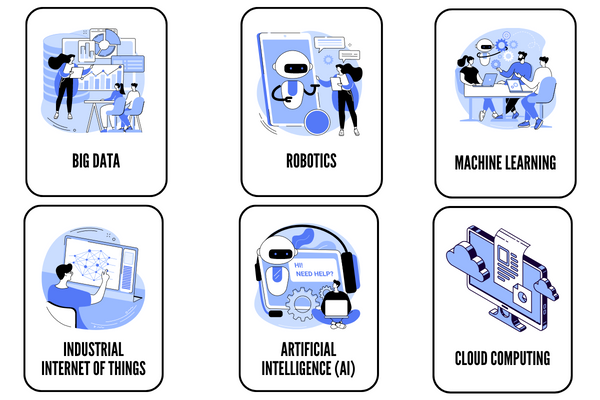
Many experts have asserted that the Industry 5.0 revolution is inevitable and the timeframe for its arrival has been identified as imminent. It could be as early as 2035 or even sooner. Leading nations like the United States and China are aggressively advancing critical technologies such as Industrial IoT (Internet of Things), big data analytics, cloud computing, robotics, artificial intelligence (AI), and machine learning...
The concept of the Internet of Things (IoT), also referred to as the Industrial Internet, pertains to the interconnection of physical and virtual devices with the Internet using sensors and monitoring equipment. Through this capability, they can gather and share data. The convergence of wireless technologies, sensor networks, intelligent exploitation, and big data has ushered in a new era, surpassing previous limitations.
What is 5.0 era? The Impact of 5.0
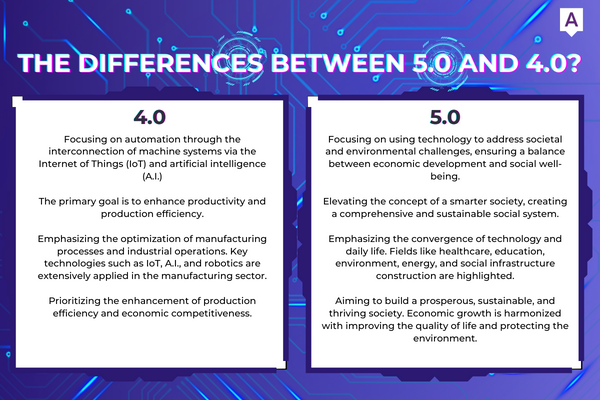
Industry 5.0 (Society 5.0) and Industry 4.0 are two significant phases in the evolution of society and industry under the impact of digital technology. While both bring about substantial changes, they differ in several important aspects:
Industry 4.0 focuses on automation through the connection and interaction of machine systems via the Internet of Things (IoT) and Artificial Intelligence (A.I.). Its main objective is to enhance productivity and manufacturing efficiency. On the other hand, Industry 5.0 emphasizes the concept of a smarter society, concentrating on utilizing technology to address social and environmental issues, ensuring a balance between economic and social development. It aims to create a comprehensive and sustainable societal system.

Industry 4.0 primarily centers on optimizing production processes and industrial operations, altering how humans work and interact with machines. Key technologies like IoT, A.I., and robotics find extensive application in the manufacturing sector. Meanwhile, Industry 5.0 expands its application scope, focusing on the intersection of technology and daily life. Fields like healthcare, education, environment, energy, and social infrastructure development are highlighted.
What is 5.0 era? The Impact of 5.0
Industry 4.0 emphasizes enhanced production efficiency and economic competitiveness. Industry 5.0 aims to build a more prosperous, sustainable, and thriving society. Economic development is harmoniously combined with improving quality of life and environmental protection.
In summary, the primary differences between Industry 5.0 and Industry 4.0 lie in their objectives, application scope, and vision. Notably, Industry 5.0's focus on constructing a smarter and more sustainable society sets it apart from Industry 4.0.

In the trajectory of technological evolution, the Industry 5.0 Revolution has emerged with the aspiration to transform how we live, work, and interact. The pivotal aspect of Industry 5.0 is the delicate integration of humans and machines, with the objective not being replacement but support and enhancement of life.
The Industry 5.0 Revolution isn't just an incremental step; it's an entirely new revolution. Its key distinction from Industry 4.0 lies not solely in technological development but also in the elevation of human-machine interaction. Here, human creativity is greatly empowered.
The changes brought about by the Industry 5.0 Revolution extend beyond optimizing production processes. It's a harmonious amalgamation of human creativity and machine precision. Collaboration between humans and machines will drive efficient, sustainable, and safe development in production.
The significance of Industry 5.0 doesn't only rest on production efficiency, but also in opening new doors within industries and societies. Its uniqueness lies in enhancing the role of humans in production through creativity and machinery system management.
The Industry 5.0 model will foster enhanced industrial competitiveness, creating favorable conditions for development and generating new job opportunities. Especially in the context of the recent Covid-19 crisis, Industry 5.0 holds the promise of aiding industries to better confront and overcome these challenges.

What is 5.0 era? The Impact of 5.0
The transition from Industry 4.0 to Industry 5.0 stems from the understanding that humans can't be entirely replaced by machines. Despite the advancing development of robots and artificial intelligence, human creativity and adaptability remain irreplaceable. Harvard Business Review has pointed out that approximately 20% - 80% of jobs can be automated, but no job can be fully automated.
In Industry 5.0, humans will take on roles that focus on creativity and machinery system management. With the support of collaborative robots (Cobots), humans will intelligently operate and manage production processes. This is a pivotal step towards the future, where humans and machines together create an efficient and optimally performing work environment.
Industry 5.0 is not merely a technological upgrade; it represents a significant step forward in the integration of humans and machines. This is a new era that brings unique possibilities for both society and the industrial landscape:
Providing solutions for societal challenges, ranging from economic to environmental issues.
Creating a collaborative working environment between humans and machines.
Enhancing the competitiveness of the industrial sector.
Saving costs and resources.
Addressing environmental pollution issues.
The Industry 5.0 Revolution is not just an opportunity; it's also a challenge, demanding the fusion of human creativity and machine capabilities. From this fusion, we can shape a future that is both intelligent and sustainable.